
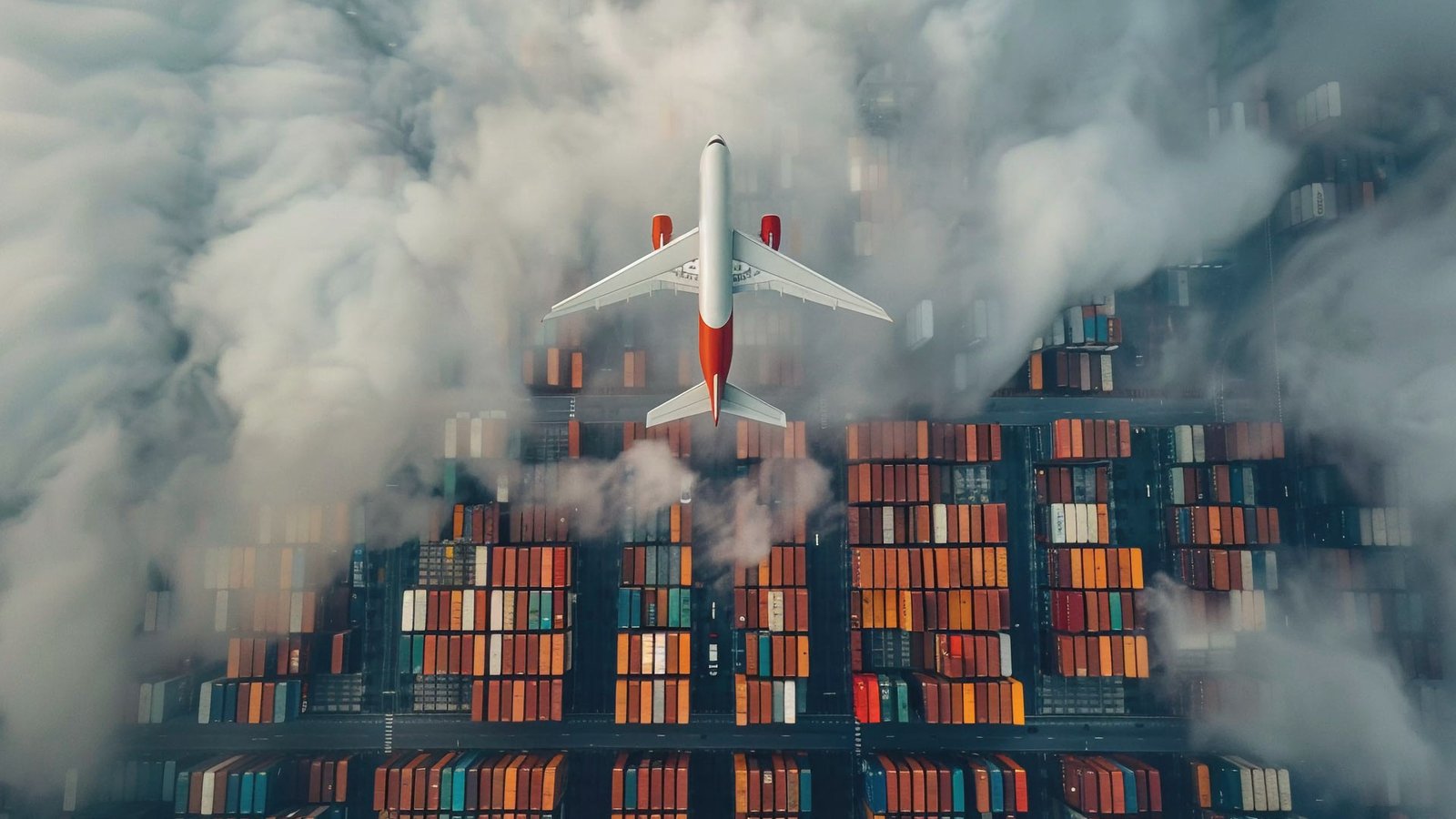
T&E’s Diane Vitry reveals the dangerous loophole of ignoring international aviation and contrails in the Paris Agreement—and how to fix it before COP30.
When governments signed the Paris Agreement, they committed to reducing emissions from every polluting sector of their economy, to keep global warming below 1.5°C. Yet nearly a decade later, a large share of emissions from two of the fastest-growing sectors, aviation and shipping, remains left out of most countries’ national climate plans (NDCs). These include CO2 emissions but also other emissions like contrails, the white clouds you often see in the sky.
This omission is not just a loophole; it is a violation of the Agreement’s core purpose. Some countries include domestic aviation and shipping emissions, i.e. the flights or journeys inside their country, but long-haul routes departing from their territory are never to be found. Seems convenient for them. In the case of Europe, departing flights represent 70% of aviation emissions, according to research by Transport & Environment, yet are ignored by the EU’s NDC.
The legal reality is clear. The Paris Agreement is temperature-based. Parties are obligated to implement “economy-wide emission reduction targets”, so that global warming is limited to well below 2°C and preferably stays within the limit of 1.5°C. A failure to address all emissions – including shipping and aviation ones – violates the central aim of the Agreement. All aviation and shipping emissions are deeply integrated into countries’ economies, so clearly fall under national responsibility. Governments cannot outsource this duty to international bodies.
But even when aviation emissions are counted, most countries ignore aviation’s biggest climate impact: contrails and other non-CO₂ effects. These white lines in the sky, formed by aircraft at high altitude, trap heat in the atmosphere. They warm the planet at least as much as the sector’s CO₂ emissions, some say they cause 1-2% of global warming. Yet, these too, like international aviation and shipping emissions, remain unregulated and invisible in climate targets. This blind spot is dangerous: it means half of aviation’s problem is being swept under the carpet.
The good news is that contrail mitigation is achievable today. Only 3% of flights are responsible for 80% of contrail warming, and small adjustments to flight paths, costing less than €4 per flight ticket, could halve contrail warming by 2040. Addressing contrails would deliver immediate climate benefits. And similarly to aviation and shipping emissions, T&E has proven that countries are legally obliged to include contrails in their NDCs, or they stand in violation of the Paris Agreement signed 10 years ago.
As countries prepare to submit updated NDCs ahead of COP30, they must stop ignoring the elephant in the room. All aviation and shipping emissions, CO₂ and non-CO₂ alike, must be included in national targets. The Paris Agreement leaves no legal or moral room for exceptions. And given the urgency, contrail mitigation should be the first step.
Without closing these gaps, we are sailing further and further away from reaching 1.5°C.
Discover the latest trends and insights—explore the Business Insight Journal for up-to-date strategies and industry breakthroughs!