
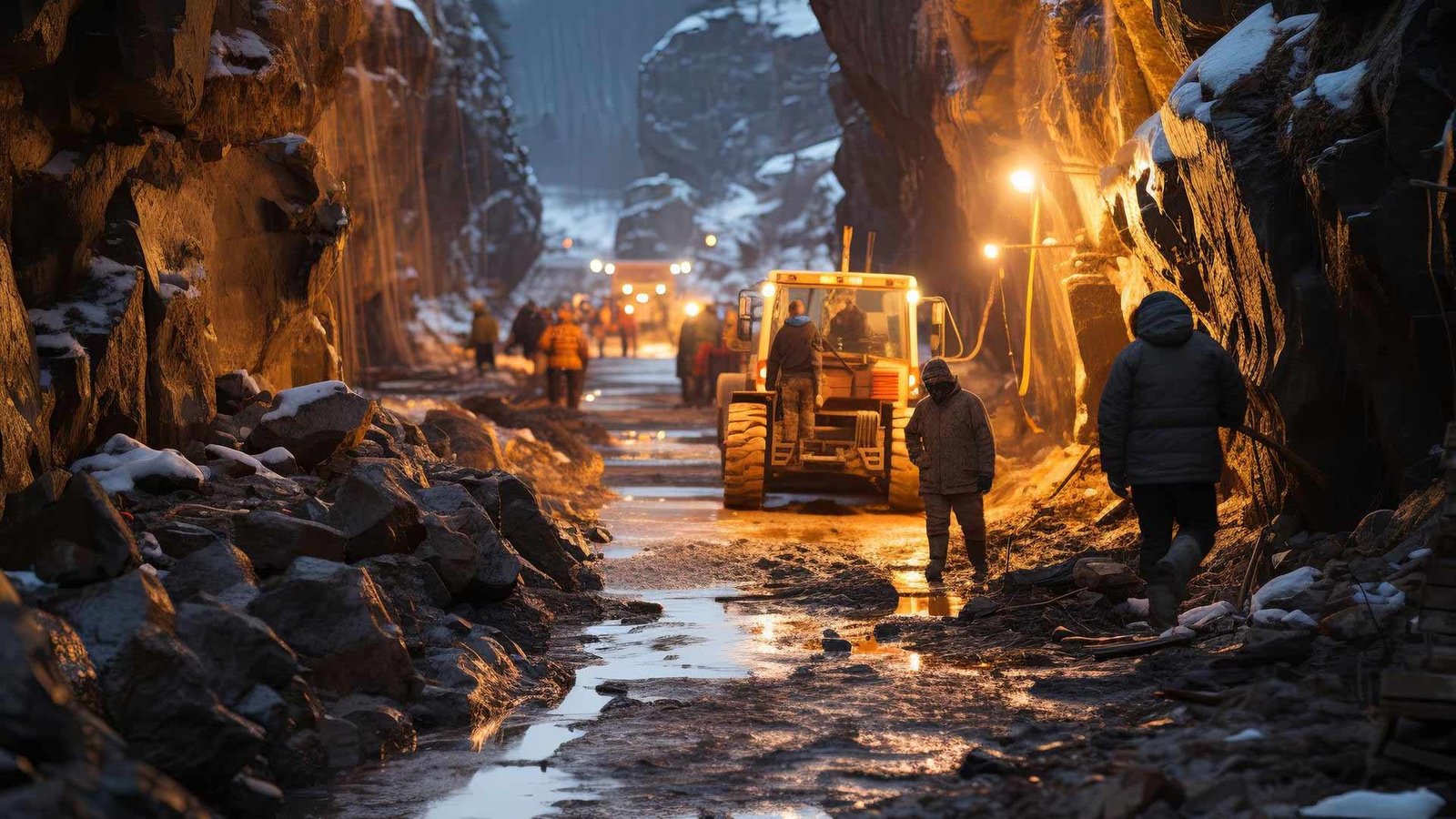
Remote mines go clean where the role of hydrogen cells & batteries in renewables results in massive efficiency gains, real-time solutions, and decarbonization.
Mining operations occur in places that are distant from transmission networks, which causes energy supply to become a logistical challenge instead of a regular utility service. Diesel generators have traditionally filled this role because fuel can be stored, transported, and used on demand. The transport of goods over long distances results in increased expenses while creating potential hazards to operations. Production stops because of weather delays and infrastructure limitations and geopolitical disruptions that occur just like equipment failures.
Renewable energy for mining integrates hydrogen and battery storage solutions for sustainable mining, enhancing operations worldwide. These technologies improve mining energy reliability, especially via the role of hydrogen fuel cells and batteries in remote mining sites, slashing diesel dependence.
1. Two Technologies, Two Time Horizons2. Lower Fuel Dependence, Higher Margin Resilience
3. Evidence from Early Deployments
4. Complexity vs Long-Term Stability
5. Future trends in green hydrogen adoption
5.1 Cost Declines Driving Scale
5.2 Major Company Commitments
5.3 Tech and Infrastructure Trends
What Lies Ahead
1. Two Technologies, Two Time Horizons
Energy storage systems bridge the reliability gap, but no single technology can meet all operational requirements of the system. The demand of different time intervals can be met through batteries and hydrogen solutions. Batteries function as system stabilizers. The system stabilizers respond to demand spikes by instantly absorbing them while restoring operations after power outages. Their high efficiency makes them ideal for frequent cycling and short-duration balancing.
Hydrogen fuel cells serve as the system’s endurance layer. The stored hydrogen system provides electricity for extended periods when renewable energy generation stops for hours or days. Hydrogen storage systems provide longer storage capacity than batteries but lower efficiency while hydrogen operates as seasonal backup. The system operates through a dual system that uses batteries for power quality management while hydrogen provides backup power during outages.
2. Lower Fuel Dependence, Higher Margin Resilience
Diesel cuts provide both emissions reductions and cost savings, while hybrid systems achieve yearly CO₂ reductions that reach thousands of tons. Green hydrogen provides a solution for long-term storage of excess renewable energy, which batteries cannot match. Payback periods reach 5-6 years at high-solar sites, which include Polish coal pumps.
The economic situation supports hybrid systems because diesel logistics costs exceed $1 million annually. The combination of wind speeds above 6 m/s and decreasing electrolyzer prices, which have reached $600 per kW, make it possible to achieve 100% off-grid power systems. The current market benefits battery systems while hydrogen technology develops for use in fleet operations.
| Aspect | Battery Storage | Hydrogen Storage | Hybrid Advantage |
| Efficiency | 85-95% round-trip | 30-40% round-trip | Balances peaks and duration |
| Duration | Hours-days | Days-weeks | 48+ hours reliable |
| Cost (Capex/kWh) | $200-400 | $600-1200 (w/electrolyzer) | Lower TCO vs. diesel |
| Best For | Fluctuations, vehicles | Long-term buffering | Remote full ops |
3. Evidence from Early Deployments
The pilot installations have shown their ability to run continuously under mining site conditions, which include both extreme temperature fluctuations and high dust levels. The hybrid wind-battery-fuel cell systems have achieved steady processing operations because they do not need diesel backing. Hydrogen-powered equipment trials show comparable operational life to conventional engines with lower maintenance requirements.
The implementation process has developed into a standard pattern which starts with energy mapping and proceeds through pilot installation and expansion until mobile fleets and processing equipment receive complete integration. The transition process operates as an infrastructure migration instead of a technology replacement.
4. Complexity vs Long-Term Stability
The transition is not simple. Hydrogen requires new engineering practices. Sites must implement storage protocols, safety training, and water assessments. Compression and storage infrastructure also adds capital complexity. Initial investment remains higher than installing generator sets.
The comparison is shifting over time. Diesel lowers upfront cost but increases operational risk and price exposure. Hybrid systems demand more engineering at the start but improve long-term predictability. As technology costs decline, decisions favor stability over familiarity.
5. Future trends in green hydrogen adoption
Mining companies are accelerating their efforts to adopt green hydrogen technology because they need to achieve their net-zero emissions targets while the technology costs decrease and government policies support their initiatives. By 2030, projections show it powering 12-20% of energy needs in heavy industries like mining.
5.1 Cost Declines Driving Scale
The production costs of green hydrogen will decrease to between $1.37 and $2.40 per kilogram through 2030 because of decreasing renewable energy prices and the expansion of electrolyzer production capacity. This pricing structure establishes mine-site fueling as a feasible option which competes directly with grey hydrogen. The period after 2030 will witness a surge of new applications, which include steel production and synthetic materials. The share of clean hydrogen reaches 30% by 2030, according to fast scenarios.
Anglo American develops hydrogen valleys and haul truck systems through its partnership with First Mode. BHP tests electric smelting technology together with Hatch to produce hydrogen-based green steel. Rio Tinto and Fortescue plan to establish production facilities at their sites, which will support their vehicle fleets. More than 1500 international projects have been announced.
Hyphen Namibia develops GW-scale solar and wind facilities to produce ammonia for export while developing mining operations. ACES Delta and other US projects store 300 GWh of energy for industrial applications. Miners develop H₂ hubs for use beyond their extraction operations.
5.3 Tech and Infrastructure Trends
Hybrid renewable systems together with H₂ storage systems allow complete off-grid operations. Fuel cell trucks provide the same operational lifespan as diesel trucks while reducing emissions between 30 and 80 percent. The electrolyzer system will reach a capacity of 114 GW by 2030 to enable hydrogen trade through pipelines and ports.
The combination of AI-optimized microgrids and underground caverns creates higher levels of efficiency. The combination of blending mandates and offtake agreements creates a reliable method to secure product demand. Miners use photovoltaic systems and wind power to generate their own energy requirements.
The result is not simply lower emissions. It is a structural change in how mines operate. Energy shifts from an external dependency to an engineered subsystem within the operation. As costs decline and deployment experience grows, hybrid storage is positioned to define the standard power architecture for remote mining over experimental alternatives.
Discover the latest trends and insights—explore the Business Insight Journal for up-to-date strategies and industry breakthroughs!
