
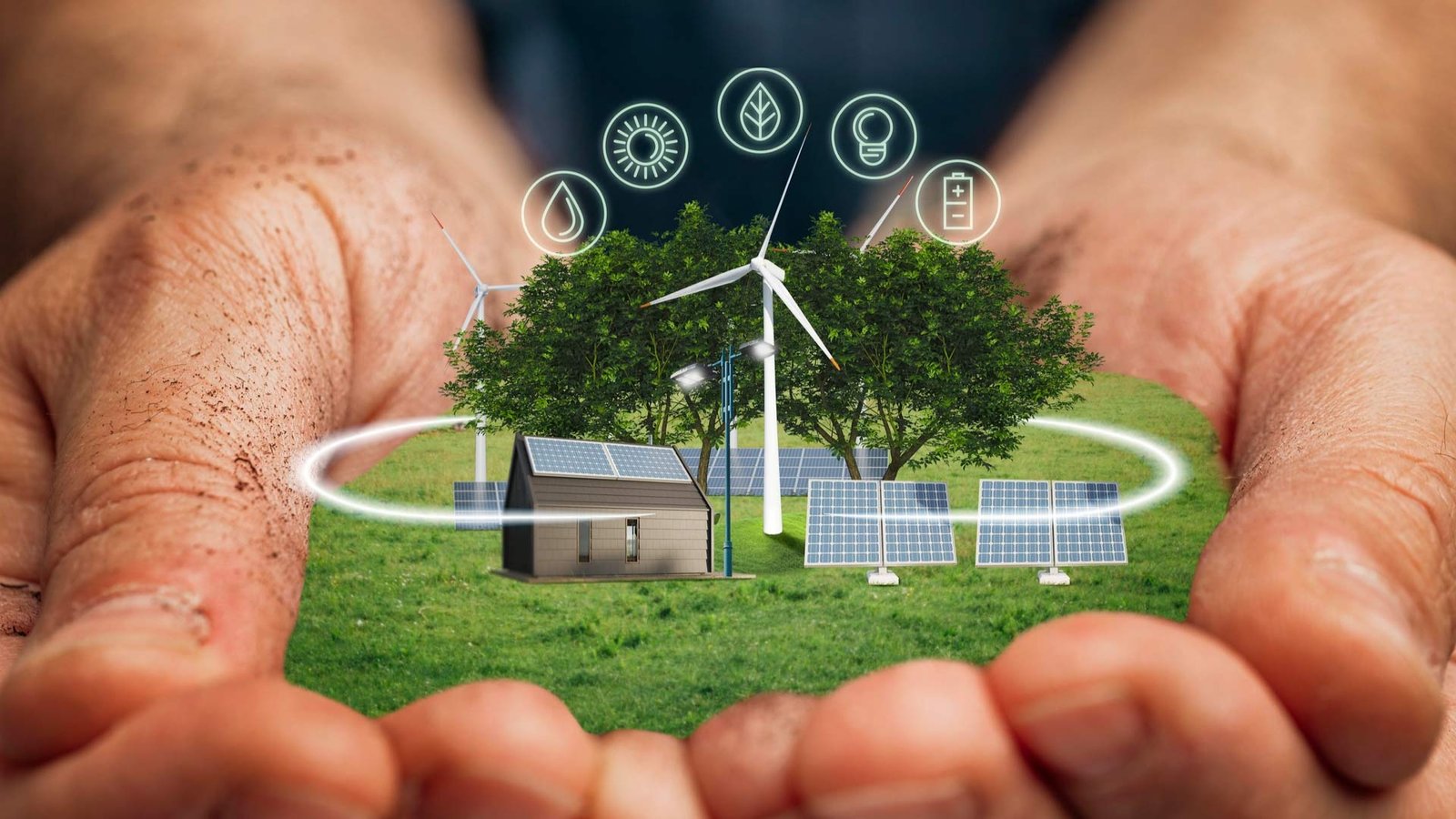
Clean energy tech is now available for heavy industries and is giving the power companies the opportunity to get the most out of their investments
Green power solutions have come to be the ones that lead the way for the use of renewable energy in the major consuming sectors of the industrial market. The transition from fossil to renewable energy has started at the manufacturing level and is the first step towards the realization that the steamiest industrial sectors can indeed go green.
Clean energy tech is now available for heavy industries and is giving the power companies the opportunity to get the most out of their investments, while the switching over of the main power lines to the green side also results in cost savings and the reduction of the carbon footprint through the imposition of the carbon tax.
Table of Contents:
1. The Imperative for Industrial Energy Transition
2. On-Site Renewable Generation Systems
3. Sector-Specific Clean Power Technologies
4. Five-Step Roadmap for Renewable Transition
4.1 Steel Industry: Electric Arc Furnace Revolution
4.2 Cement Sector: Clinker Reduction and Electrification
4.3 Chemicals and Aluminum: Electrolysis Breakthroughs
4.4 Pulp & Paper: Biomass Combined Heat and Power
5. Overcoming Transition Barriers
6. Future Horizons in Green Power
Conclusion
1. The Imperative for Industrial Energy Transition
Energy-consuming industries are subjected to strict regulations and the pressure of the market. Cement production is responsible for 8% of the world’s CO₂ emissions, while the smelting of aluminum requires 15 MWh of electricity for each ton produced. The European Union’s Carbon Border Adjustment Mechanism, which will come into force in 2026, will result in a 20-50% increase in the cost of high-carbon imports, and at the same time, 85% of the companies in the S&P 500 index plan to reduce their emissions in Scope 2.
The advantages of renewable energy for industrial use are very attractive: 30-50% reduction in energy costs over ten years (BloombergNEF), higher brand equity (78% of consumers prefer sustainable brands, according to Nielsen), and a fossil price volatility-free supply chain due to demand elasticity. The giants of the industry, such as ArcelorMittal, are leading by showing that the 8 GW renewable PPA portfolio is not only achieving but also maintaining the cutting of 25% of the associated emissions through stable tariffs.
2. On-Site Renewable Generation Systems
On-site renewable sources have an instant effect on the environment and energy costs. Solar power multiplied on rooftops is able to reach the 100 MW limit of factories, and hybrid wind-solar-storage systems get as high as 90% in their capacity. The solar cells at Tesla’s Gigafactory Shanghai are linked up with MegaPack batteries for 24/7 provision of green electricity. These energy sites are free from grid limitations and utilize between 70 and 100% of their power requirements, based on IRENA standards.
3. Sector-Specific Clean Power Technologies
Moving from the electric arc revolution in steel to the clinker innovation in cement and the breakthroughs in chemical electrolysis, these tried and tested methods not only effectively cut the emissions by 70-90% but also keep the companies in the game economically. Pulp & paper is already a shining example of biomass use, showing that even the most energy-consuming industries can rely on renewable energy for different purposes by switching over from fossil fuels.
4. Five-Step Roadmap for Renewable Transition
Structured phases are the way for energy-intensive industries to go through the renewable energy switch. In the first place, using Schneider Electric’s EcoStruxure and other tools, ISO 50001 energy audits will be done to get the Scope 2 footprints of the company. At the same time, the company will be able to assess its energy consumption. The second step is the introduction of a Power Purchase Agreement (PPA) strategy together with the Renewable Energy Certificates (RECs) system, with the objective of having 30% renewable energy usage in the first year.
As part of the third phase, companies will have to modernize their facilities by installing state-of-the-art battery storage technology for peak shaving and smart meters for demand response—Fluence has been successful in its 100 MW/200 MWh deployments that are able to stabilize grids effectively. The fourth step revolves around the use of electric technologies such as industrial heat pumps and induction furnaces for the production of goods and proper disposal of waste at a cost of €50/t CO₂ abatement (McKinsey) with a 40% feasibility rate.
In the last phase, the companies will utilize AI-based energy management systems; Google’s DeepMind, for instance, is responsible for a 40% reduction in cooling of data centers, while the industrial counterparts will continuously save 20%.
4.1 Steel Industry: Electric Arc Furnace Revolution
Decarbonization of steelmaking is primarily done through the use of electric arc furnaces (EAF), which are powered by green electrons and scrap, resulting in 80% less CO₂ emissions compared to blast furnaces. Nucor’s 3 Mtpa facilities are entirely powered by renewable energy, whereas SSAB’s HYBRIT hydrogen-reduced iron production process will yield fossil-free steel by 2026. The power technologies that are clean for heavy industries not only change the image of steel from being a carbon culprit to that of a sustainability leader.
4.2 Cement Sector: Clinker Reduction and Electrification
The revolution in cement production is through a mix of using alternative cement raw materials such as fly ash and slag (which leads to an overall reduction of carbon emissions of 30%) plus the use of electrified kilns and biomass co-firing (which will lead to a further 20% decrease in emissions). Heidelberg Materials is pushing ahead with its 170 million euro carbon capture pilot project that will trap 400,000 tonnes of CO₂ every year. Using oxygen-enriched fuel combustion in conjunction with bioenergy with carbon capture and storage will provide an overcoming of the emissions issue of 90%. Thus, renewable energy for this sector is not only possible but also economical, despite the fact that easiness is a very rare scenario in this industry.
4.3 Chemicals and Aluminum: Electrolysis Breakthroughs
The chemical industry has been using electrolysis, which in turn has been producing green ammonia and reducing the emission of fertilizers by 50%. The Yara Company is located in Norway, and using 500 MW of hydro-solar power, it produces 1 Mtpa. The aluminum industry is moving forward by the use of inert anode cells, which have zero PFC emissions; also, the ELYSIS technology developed by Rio Tinto allows for 100% renewable smelting at the rate of 13.5 MWh/ton as compared to the conventional 15 MWh/ton.
4.4 Pulp & Paper: Biomass Combined Heat and Power
Biomass CHP systems that utilize production waste enable pulp and paper mills to perform remarkably. The mills of Stora Enso run entirely on renewable sources, and consequently, they sell the excess electricity. Digital twins, such as Siemens’ MindSphere platform, are employed to monitor and control energy utilization, resulting in 15% less wastage through real-time analysis for all industrial applications, which constitutes one of the major benefits of being digitally integrated.
5. Overcoming Transition Barriers
Grid congestion leads to delays in 20% of the projects and a capital expenditure of $500B every year, which is required by the IEA. Virtual power plants bring together the industrial power consumption, making up to €50/MWh in ancillary services. Membership in the RE100 coalition accelerates the approval process for more than 300 corporates, while training for renewable O&M reduces the downtime by 25%.
6. Future Horizons in Green Power
The endurance of storage provided by iron-air batteries is a hundred hours, geothermal gives baseload heat, and small modular reactors help to mitigate intermittency. The collaboration of AI orchestrating multi-vector systems and blockchain power purchase agreements leading to the subdividing of energy matching has become the norm. The capacity worldwide needs to triple by the year 2030 (COP28) in order to satisfy the requirements of the industry.
Conclusion
Green energy alternatives are gradually taking the place of traditional energy sources in energy-sapping industries while making the industries more resilient in the long run. It is the combination of the use of renewable power for production and the deployment of clean power technologies in heavy industry that brings authentication of green power usage to industrial operations with great intensity. The switch has a powerful effect on the competition, the planet, and the financial sector, with trillions of dollars at stake.
Discover the latest trends and insights—explore the Business Insight Journal for up-to-date strategies and industry breakthroughs!
