
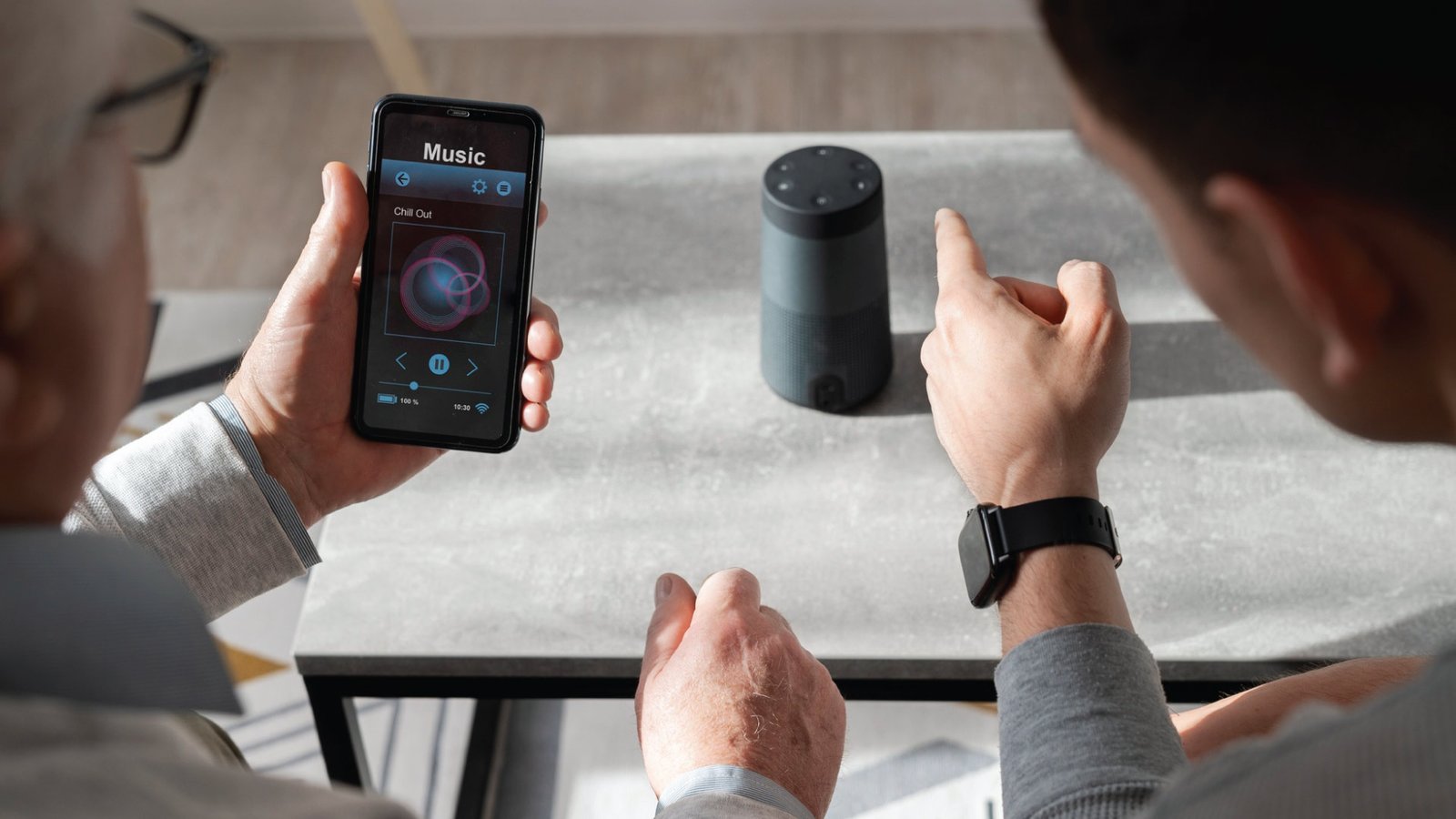
Gesture and voice interfaces transform inclusive education, where voice tools empower disabled students, and gesture apps inspire inclusivity.
Gesture interfaces and voice interfaces are the driving forces behind inclusivity in education, as they remove all the traditional barriers to participation. Thus, making gesture and voice interfaces the most important tools in education for diverse learners. Voice-controlled learning tools for the disabled students allow the students to go through the lessons hands-free, while the gesture-based educational applications for the inclusive classrooms promote physical expression and thus drive digital interaction. These user-friendly modalities are the ones that turn every classroom into a place where each student, no matter what his/her physical or cognitive or sensory ability is, can actively influence the path of his/her learning trip.
Table of Content:1. Voice Interfaces: Conversation as Curriculum
2. Gesture Recognition: Body as Controller
3. Assistive Technology Integration
4. Teacher Enablement and Classroom Management
5. Ethical Design and Bias Mitigation
6. Scaling Infrastructure Challenges
7. The Vision? Brain-Computer Interfaces
Conclusion
1. Voice Interfaces: Conversation as Curriculum
Voice-controlled educational technologies for disabled pupils perform outstandingly in areas where typing causes difficulties. Through AI, the text’s meaning and learning level are analyzed for simpler explanations or answering. Advances in automatic conversion of speech into text with awareness of context allow differentiating between commands given in the class and casual talks, thus minimizing the occurrence of erroneous identifications during group work.
Voice interfaces are the all-knowing assistants for people with visual impairment studying. Screen readers turn into interactive tutors, who are good at notifying about important ideas, giving quizzes based on the student’s recent activities, and recommending further learning based on the question types. Capabilities to communicate in multiple languages ensure that students who are not fluent in the language of instruction can receive the same content as their peers in the language they are most comfortable with, thus removing language as a barrier to learning.
2. Gesture Recognition: Body as Controller
Applications of gesture-based technology in education for inclusive classrooms change the way the physical space is perceived by turning it into an interactive canvas. The use of depth cameras for skeletal tracking detects the full-body movements of the students and then connects them to the objectives of the curriculum. For example, students can physically balance chemical equations by putting molecular models in the right positions, or they could conduct a virtual orchestra where placing notes helps to learn rhythm and harmony.
The precise gesture libraries are able to tell the difference between functional commands (like swipe to advance) and expressive input (for example, hand shapes forming geometric proofs). Tactile confirmation is given to the deafblind learners through the haptic feedback vests, and the adaptive difficulty is able to scale gesture complexity according to the motor ability, so the students are challenged without being frustrated.
3. Assistive Technology Integration
Gesture and voice interfaces not only supplement but also enhance the already existing assistive technical environment. In the case of infirmity or disability, eye-tracking systems and their recognition aids through gestures constitute the first line of support for the blind; Braille readers get the textual content through the voice of the speaker and vice versa. The central input managers systematically conduct all the modalities through one application layer; thus, the cognitive load due to the switching of tools is completely removed.
Vibro-tactile gesture pads for deaf as well as blind pupils convert the teacher’s movements into patterns that can be worn on the body, so the children can keep their awareness of what is going on in the lecture. These combinations of technologies result in the creation of complete access ecosystems rather than the provision of isolated solutions.
4. Teacher Enablement and Classroom Management
Teachers, through the interface orchestrations, attain comprehensive awareness in every possible way. Voice commands bring up the dashboards of student progress; the areas for gestures indicate where noise from the environment is being cancelled. The application of live translation earpieces makes it possible to teach students who speak different languages, whereas gesture summaries are of great help in conveying whiteboard content to absent students.
Little by little, the assessment process changes from pen-and-paper to performance capture. Gesture recognition awards points for the communication skills; the monitoring of voice emotions signals the degree of understanding and consequently the capability to distinguish the type of intervention that is carried out without interrupting the class flow.
5. Ethical Design and Bias Mitigation
Inclusive education has to go through a thorough testing of the inclusivity of disability spectra, accents, skin tones, and motor variances. Gesture libraries are trained on large motion capture datasets throughout the whole epochs; voice models denounce their biases through adversarial training against demographic classifiers. Continuous monitoring identifies the performance differences that are caused by the unbalanced data, and hence, dataset augmentation is triggered.
Privacy-preserving measures allow data to be kept only during the active session, and local processing helps to reduce cloud dependency. Transparent audit logs give the possibility to the caregivers to confirm equitable treatment without revealing the student’s identity.
6. Scaling Infrastructure Challenges
The deployment of the interface implies very strong wireless ecosystems and edge computing to be the minimum latency; it challenges us to overcome device lag of more than 50 ms in order to keep the users immersed in the virtual reality environment. The diversity of devices calls for universal APIs connecting smartboards, tablets, and wearables. The development of professionals is a transition of teachers from being technology troubleshooters to being interface choreographers.
Public-private partnerships are equity gap solutions that enable the bulk purchase of adaptive peripherals for the less privileged districts. The creation of open-source gesture taxonomies speeds up the global acceptance of the technology while still allowing local cultural variations.
7. The Vision? Brain-Computer Interfaces
Next-gen interfaces have the capability of decoding the neural intent without any reasoning and thus not engaging muscular execution at all. Gesture and voice operate as links, making the neural pattern recognition ready for thought-based curriculum navigation. The use of physiological signals along with behavioral data results in hybrid systems that have very high personalization granularity achieved.
The guaranteeing of cognitive freedom and the prevention of algorithmic determinism are secured along with the ethical frameworks that keep on evolving simultaneously. The principles of inclusive education are the ones that lead this tech that is at the cutting edge, which helps human diversity but never limits it.
Conclusion
More than just a matter of convenience, gesture interfaces and voice interfaces in education signify educational justice. The use of voice-controlled learning tools for students with disabilities and gesture-based educational applications for inclusive classrooms rips off the layers of exclusion that have been built into the traditional interfaces. The success of real inclusion can be judged by the loudest voices being heard and the faintest gestures being acknowledged.
The institutions that are delaying the adoption are not only falling behind in terms of technology but also causing the inequity that could be avoided to continue. The choice that every teacher has to make is this: either continue with the obsolete input paradigms or be the ones who lead the access revolutions where the expression of every learner is what drives the discovery.
Discover the latest trends and insights—explore the Business Insight Journal for up-to-date strategies and industry breakthroughs!
