
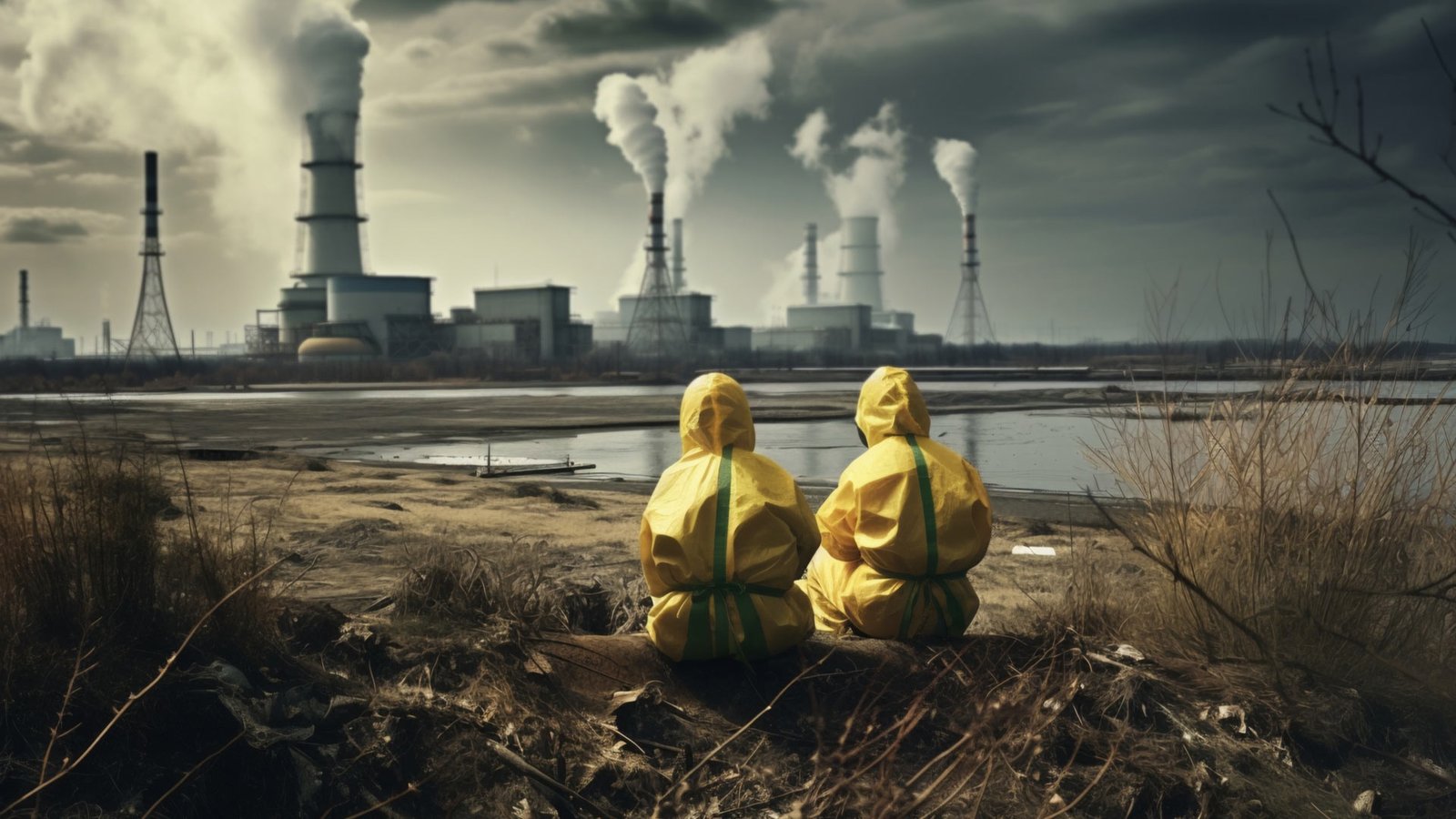
After 2040, the atmospheric CO₂ content will be lower than before since the sink created by manufacturing will be larger than the emissions.
We’ve been touching base with climate change’s consequences for over a decade now, and for most of it we believed what’s done is done. With the hope of a silver lining, little by little with efforts, we were aiming to reach neutrality and not hurt the very land we live on. One thing led to another, and compliances made to combat climate change quickly turned into ones demanding a net-positive manufacturing. Now not only reduction but reversal of damage is possible. Industries are picking up on it and so are government policies for product manufacturing.
1. Significance Of Carbon Negative Manufacturing
2. Real-World Examples Driving The Shift
3. Technological Innovations Powering Reversal
4. Policy And Market Forces Accelerating Adoption
5. Strengths, Barriers, And Economic Impacts
6. The 2030-2050 Trajectory
Conclusion
1. Significance Of Carbon Negative Manufacturing
The concept revolves around the circular economy, which further leads to global sustainability, as the waste is minimized and the resource is used more efficiently; besides that, new economic opportunities are opened up in green technology and sustainable materials. The transition of it is being supported by government regulations and the market demand for green products. The combination of new techniques like bioenergy with carbon capture and storage (BECCS) allows the industries to reduce their carbon footprint to the point of being carbon negative, and thus, the society’s engagement with climate solutions is driven further.
There are notable improvements in technology, such as the transformation of CO₂ waste into long-lasting, carbon-negative building materials that come with better mechanical properties; thus, the carbon sequestration benefits can be carried forward to the construction industry. On top of that, metabolic engineering is used to provide industries with chemicals that have a net-negative carbon footprint, as the carbon is being fixed during fermentation. To cut down energy consumption and emissions significantly in the industry’s heating and cooling processes, energy-saving technologies like heat pumps are now in place.
2. Real-World Examples Driving The Shift
Innovators have introduced carbon-negative methods in various sectors, opening the door for large-scale model reversal. CarbiCrete utilizes disposal minerals and CO₂ to manufacture blocks without cement, and thus, among others, the company is cutting down on emissions and going through financial support. The innovations mentioned above, effectively, take the place of the usual materials, and this way they are able to prove carbon negativity in the high-emission sectors of the construction industry.
In the area of chemicals, modified bacteria such as Clostridium autoethanogenum turn gases into acetone and isopropanol with great selectivity, and such a process attracts less carbon than the total gas released—thus a carbon-negative footprint is certified. The company Nitto has a plant in Shiga where it uses gas separation membranes for CO₂ recovery from the exhaust gas; the company simply converts this gas into an acid called formic and at the same time meets the target of capturing the CO₂ in the atmosphere so as to achieve total negativity. The newer tech even gives us carbon-negative ammonia from the atmosphere by the air-capture method.
Oil produced from olives is combined with BECCS as a result of the burning of tree-pruning residues to provide carbon-negative electricity, wherein the emissions of the entire chain are neutralized. The material made by Northwestern University is capable of capturing CO₂ in a form that lasts for a long time, thus making concrete and cement production and even paving hydrogen fuel for the cement heavyweight problem of global emissions. This pattern is observed in various industries, from agro-processing to advanced synthetics, proving the technology’s adaptability.
3. Technological Innovations Powering Reversal
Progress in direct air capture (DAC) and mineralization along with manufacturing is co-working to transform CO₂ into stable carbonates for use in paints, plasters, and aggregates. Factories are powered by biomethane derived from palm oil mill effluent, while AI-controlled solar module plants are already paying off in terms of energy consumption on their way to becoming negative entities. For commodities, metabolic pathways in acetogens allow gas-to-chemicals production without fossil inputs and are, in fact, scalable.
BECCS hybrids are the major players, as demonstrated by the case of olive mills that burn prunings to generate net-negative power. Industrial heating emissions are cut by heat pumps and electrification, while the CO₂-to-materials loops are adding up to the emission reduction. These technologies can be stacked—DAC with BECCS and microbial fixation with membranes—to achieve compounded sequestration and thus convert factories into atmospheric sinks.
4. Policy And Market Forces Accelerating Adoption
The Carbon Border Adjustment Mechanism of the EU and the U.S. Inflation Reduction Act governments make it easier for BECCS and DAC to exist and force green purchases. The market reflects this truth: carbon-negative certifications increase the prices, and the financing of developers like CarbiCrete by investors is taking place. Corporate promises from Microsoft to IKEA are directed towards negativity, thereby pulling the supply chains along.
There is a changeover from net-zero reporting to reversal metrics according to ISO standards that put companies that do not comply under pressure. Tax credits for sequestered tons, a form of incentive, promote the projects while the demand from consumers for certified negative products increases every year.
Key Statistics Highlighting Impact
- Over 54% of worldwide energy usage comes from manufacturing, and, at the same time, carbon-negative techniques are making this industry a possible carbon sink, according to the World Economic Forum.
- From 2002 onwards, top producers have reduced their energy use and also achieved notable cuts in carbon emissions.
- The market for carbon-negative plastics is estimated to expand a lot due to the sustainability of materials demand up to the year 2030 as per the Grand View Research.
5. Strengths, Barriers, And Economic Impacts
Carbon-negative production has its strengths in areas where the most impact is made, like cement and chemicals. From an economic point of view, it is a cost-cutting measure and a market-opening tactic in the area of sustainable materials.
However, certain obstacles are still in the way: initial expenses of DAC/BECCS, supply chain traceability, and scaling risks. The energy that will be required for these processes is going to have to come from renewables. On the bright side, returns on investment will be seen through efficiency and higher prices.
Conclusion
Think not only of factories that heal the atmosphere but also of factories that regenerate ecosystems as well—so that biodiversity is planted by biogenic processes, and the soil is restored through circular byproducts. Will production plants turn into custodians of the Earth, and will the negative carbon footprint transform into entirely net-positive environments? The change calls for a huge investment today; to delay is to put money into non-productive assets, which are better off in the past. If turning around is possible at this moment. What future scenarios of restoration will there be for the pioneers?
Discover the latest trends and insights—explore the Business Insight Journal for up-to-date strategies and industry breakthroughs!
