
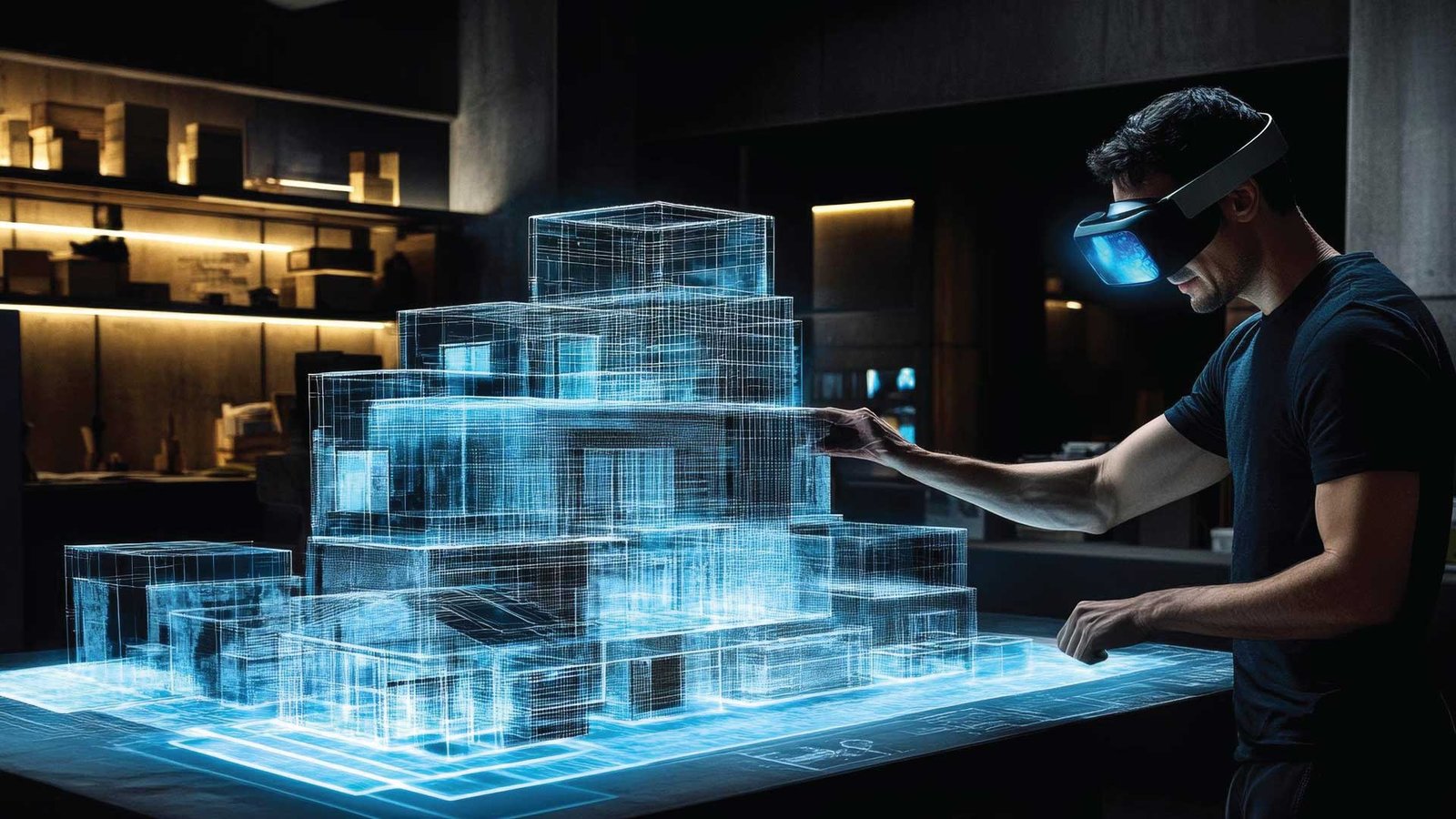
Discover how BIM, AR, and VR in VDC streamline construction planning, enhance collaboration, and reduce project delays and costs.
Construction is in a digital revolution and at the forefront, Virtual Design and Construction (VDC) practices developed through Building Information Modeling (BIM), Augmented Reality (AR), and Virtual Reality (VR). To the C-suite executives, Project Directors, the VDC managers, BIM coordinators, and leaders of innovation, integrated digital workflows are not about technology-sake: it is about actual enhancements in project planning, factors of risk reduction, collaboration, and cost management.
This article discusses how the integration of BIM with AR and VR in VDC yields efficiencies in any projects around the globe, be it transport or mid-rise projects, to improve output and ROI.
Table of Contents:1. Strategic Integration of BIM, AR & VR into VDC Workflows
1.1 BIM as the Digital Foundation
1.2 AR for Field Precision & Clash Resolution
1.3 VR for Immersive Visualization & Decision Support
2. Operational Benefits: Efficiency, Risk and Collaboration
2.1 Reducing Error, Rework & Waste
2.2 Enhanced Collaboration Across Teams
2.3 Safety, Training & Compliance Gains
3. International Case Studies & Metrics of Success
3.1 Transport Hubs and Large Infrastructure
3.2 U.S. Mid-Rise & Digital Twin Advancements
3.3 Measurable ROI and Adoption Statistics
Conclusion
1. Strategic Integration of BIM, AR & VR into VDC Workflows
1.1 BIM as the Digital Foundation
Architectural, structural, and MEP (mechanical, electrical, plumbing) systems are united in a single model that is Building Information Modeling (BIM) at the center of a digital construction. BIM is the single source of truth for all stakeholders so that the designers, contractors, and planners operate on the same set of information, which will greatly lower the levels of ambiguity and miscommunication. The capacity of BIM to assist in scheduling (4D), cost estimation (5D) and lifecycle management prepares further efficient planning and implementation.
The integration of BIM not only enhances better visualization, but also allows detecting and resolving clashes during the pre-construction phase, which will also reveal the contradiction between systems before a beam is assembled. This early coordination of the BIM greatly reduces rework and costs related to rework. Digital twin frameworks are also based on the digital foundation of BIM, with real-time project information guiding predictive decision-making and forecasting performance.
1.2 AR for Field Precision & Clash Resolution
AR can be described as an expression of BIM that transports the desktop into the real-life location of the work by superimposing the digital models on the real world. Using AR-enabled devices, including tablets and AR headsets, teams will be able to see in real space where such components as ducts, conduits, and structural supports should be located. This simulated overlay will save a lot of accuracy in field coordination and installation.
Other international contractors like Skanska have led in the promotion of AR workflows using BIM to improve on-site modeling. AR assists crews in identifying spatial conflicts that may not be detected by programmed clash detection, thus allowing error detection in real-time before the commencement of physical work. To some projects, these AR/BIM overlays have been attributed to as much as 70% of the rework reduction, an increase in productivity and a reduction in time and cost overrun.
In addition to clash detection, AR helps with site layout instructions and construction sequencing audits. The supervisors can draw comparisons between the intended schedule and space positioning and the real site parameters, thus minimizing delays and field rework. The applications of AR are as follows:
- Superimposing the BIM objects on the field conditions to lead the installations.
- Emphasizing discrepancies between as-built and as-planned models.
- Offering guidance to the workers by giving them assembly instructions in real time and not depending on two-dimensional documents.
In the case of VDC and project leaders, this means that there is increased accuracy in planning, reduced stoppages, and enhanced cross-discipline alignment.
1.3 VR for Immersive Visualization & Decision Support
Virtual Reality (VR) transforms BIM models into immersive, navigable spaces that can be explored by the stakeholders before the construction of the project starts. VR leads to a significant enhancement of spatial perception and facilitates better-informed design and planning decisions than traditional screen-based representation.
In large and complex constructions, VR can be an effective tool to:
- Design validation: This involves walking through virtual spaces with the designers and end clients to agree on expectations.
- Collaborative reviews: Distributed teams get into common VR spaces where the design implications are examined collaboratively.
- Scenario testing: Project teams can test phasing and logistical flows of construction in an environment of no risk.
The ability of VR to create a simulation of the environment also facilitates stakeholder involvement, where the executives and the clients can realize the design intent at an early stage, eliminating the need to revise it at a later stage and the need to make expensive changes.
The increased immersion assists the project owners and planners to view constraints and opportunities that may not present themselves until physical construction in case if not identified under conventional reviews.
Finally, VR in VDC will take the information in the BIM to the next level of data by enhancing it with experience, allowing faster and more quality decision-making throughout the project lifecycle.
2. Operational Benefits: Efficiency, Risk and Collaboration
2.1 Reducing Error, Rework & Waste
BIM, AR, and VR workflows, when integrated to their core, would greatly eliminate errors, rework, and waste, which were constant bog busters in construction projects. The clash detection processes of BIM determine the conflicts in the early stages; when it is used with AR overlays on the field, numerous problems can be fixed even before the fabrication or installation processes are started. This is a preventive error that saves labor and material expenses.
Digital identification of possible problems helps the teams to evade the traditional cycle of making corrections may cause schedule inconveniences. Sequencing and logistics planning is also facilitated by BIM combined with immersive tools, which can optimally allocate resources and reduce the wasteful activities at the site that reduce wastage at the site.
2.2 Enhanced Collaboration Across Teams
Teamwork has continued to be a priority among construction executives, particularly in a project of a large or intricate nature involving a multidisciplinary team. BIM creates a common model space, whereas AR and VR apply the same experience to the field and to immersive planning.
AR enables crews on site to view the actual state as compared to the BIM blueprint to enhance clarity and inter-trade hand-offs. VR will allow remote multi-user design review during which the participants can view the model and discuss it in context, despite physical location – creating more agreement and lessening travel expenses and decision time.
These mutual digital experiences promote better communication, understanding, and approvals. This will reduce the RFIs, revision cycles and the lack of a cohesive planning process that ensures all the stakeholders are on the same page during the design and construction to VDC Managers and BIM Coordinators.
2.3 Safety, Training & Compliance Gains
Strategic imperatives are safety and compliance. VR environments provide secure, controlled conditions for workers to practice site conditions, train complicated procedures, and review rules before exposure to hazards, decreasing the rates of accidents and insurance liability. AR is useful in visualizing the safety zones, egress routes, and equipment positions on the spot to gain a better understanding of the situation.
Interactive simulations are also effective for regulatory checks before construction that guarantee compliance with standards and building codes among compliance managers. These functions are useful in minimizing the number of incidents taking place on the site and assist in continuous training of the workforce without interfering with the work in the field.
3. International Case Studies & Metrics of Success
3.1 Transport Hubs and Large Infrastructure
The global transport projects have used BIM, AR and VR in planning and optimization. An example is the designers of Heathrow Terminal 5 and other airport projects that have used VR under the influence of BIM to model the flow of people, evaluate the circulatory patterns, and test evacuation plans in the design stage before the building started, as well as to ensure the codes were met and that the commissioning process went smoothly.
Such immersive simulations have also contributed towards bottlenecks being revealed in the teams and spatial arrangements being optimized in ways that would have only been known during corrections after construction. The outcome: reduced retrofit, shorter commissioning, and increases in operational preparedness, which proves the usefulness of immersive planning of the transportation hubs.
3.2 U.S. Mid-Rise & Digital Twin Advancements
The performance improvement in mid-rise projects that combine advanced digital twin frameworks and BIM has been impressive in the United States. A digital twin workflow BIM with analytics applied to one case study in Texas showed that the workflow saved 43% of the effort of estimating labor and 6% of overtime, and was faithful to the schedule within uncertainty limits.
These performance advantages highlight the importance of integrative digital models and real-time analytics to make more correct predictions and more adaptive planning, which directly contributes to the beneficial effect on project directors and executives when they want to obtain measurable operational returns.
3.3 Measurable ROI and Adoption Statistics
International studies of the BIM, AR, and VR usage reveal an increase in the use of the immersive tools in the digital construction processes. Research also shows that an increasing age of companies that combine AR/VR and VDC processes is increasing with the level of digital maturity. Companies with standardized BIM who use it almost daily are reporting direct benefits in the form of increased success rates in bids and greater cost discipline cycles.
These trends should give hope to the decision-makers: those companies that move to an integrated digital workflow experience increase efficiency, reduce change orders, and decrease risk premiums, which result in measurable project results.
Conclusion
It is no longer a niche project to integrate BIM, AR, and VR into VDC; rather, it is a strategic need of decision-makers in the building and infrastructure industries. BIM prepares the groundwork for sound planning, AR provides accuracy in the field, and VR provides a crystal-clear immersion that aids in making decisions faster and better.
The outcome:
- reduced mistakes
- enhanced cooperation
- safer environments
- calculable ROI on multifaceted projects.
To executives, project directors, and technology leads, adoption of such technologies can lead to efficiency gains that will be felt during the planning stages but also on the project lifecycle, including the design and handover phases and further.
Discover the latest trends and insights—explore the Business Insight Journal for up-to-date strategies and industry breakthroughs!
