
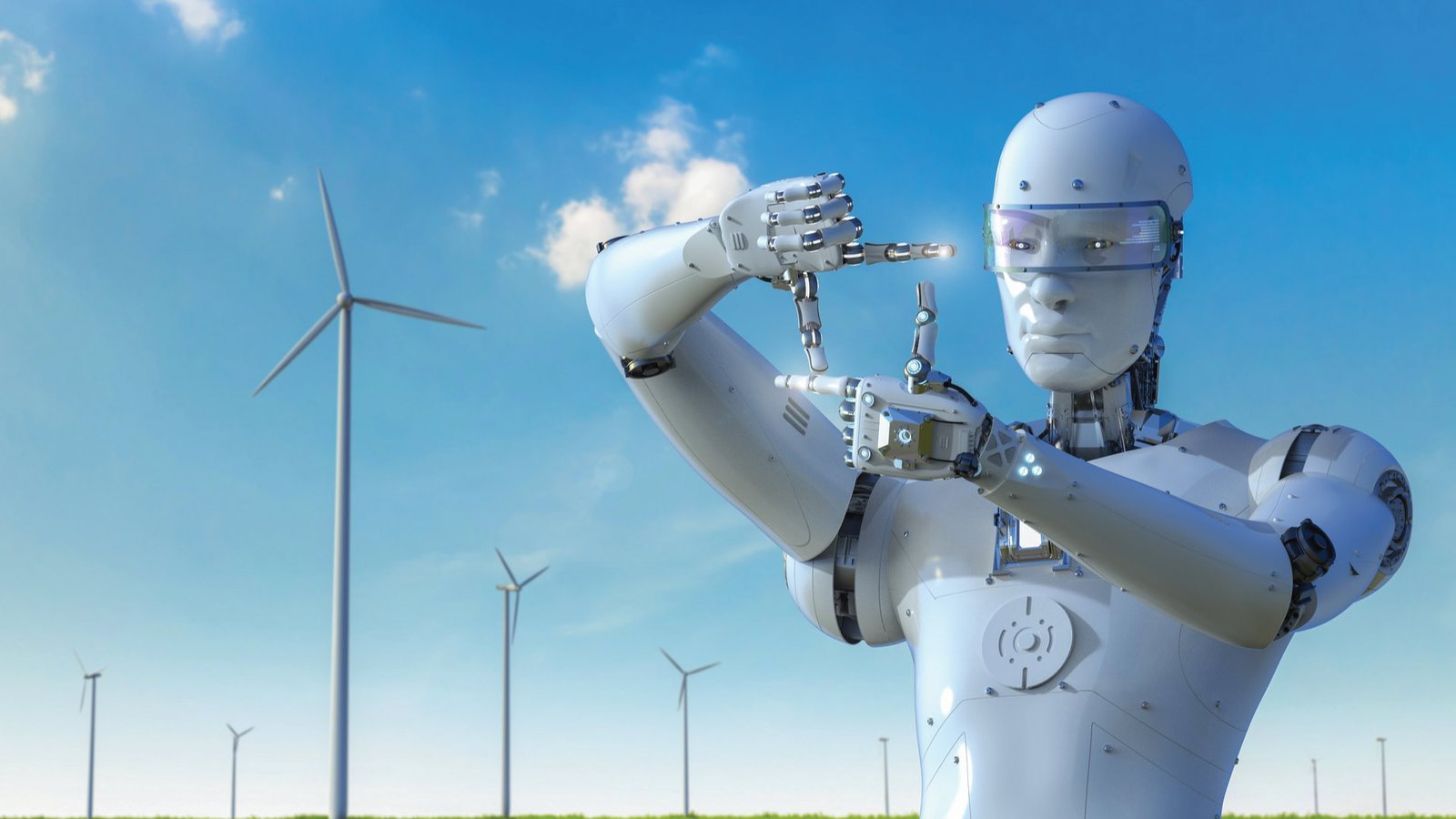
Discover how AI-driven energy systems optimize efficiency, cut emissions, and accelerate the shift to clean, sustainable power for a greener future.
Taming the emissions of greenhouse gases is giving the global society a nightmare because it has to deal with the problem by quickening the pace of its efforts to reduce them without causing an irreversible rise in the impact of climate change.
Production and use of energy have been the biggest contributors to world emissions, with more than two-thirds of the total. Although renewable energy sources have made a breakthrough, the complex nature of contemporary energy requirements cannot be addressed with the new infrastructure alone.
The smarter flexible solutions are required to regulate the balance between supply, demand, and sustainability. Artificial Intelligence (AI) has become a game-changer since it can optimise energy systems and minimise inefficiencies, and bring the world on the path to net-zero emissions.
Table of Contents
1. Understanding AI-Driven Energy Systems
2. Optimizing Energy Generation with AI
3. Smarter Energy Consumption and Demand Response
4. Reducing Emissions Across Industry
5. Global Impact: Quantifying Emission Reductions
6. Challenges and Barriers to Adoption
7. The Future of AI in Energy Sustainability
1. Understanding AI-Driven Energy Systems
Artificial intelligence-powered energy systems take advantage of the superior technologies of machine learning, predictive analytics, and automation to enhance efficiency and reliability surrounding the process of energy production, distribution, and consumption.
Data from sensors, smart meters, weather forecasts, and industrial processes are fed into these systems in large quantities and serve to impact real-time decision-making. Machine learning, in turn, can be used to predict the generation of renewable sources, and predictive analytics would assist in estimating demand peaks.
AI is easily incorporated with renewable energy systems, electricity networks, and industrial plants, which makes operations much easier and mitigates energy loss. In contrast to the classical energy management system, AI-based solutions are dynamic and are constantly learning and adjusting to changing conditions.
This dynamism prequalifies them as the best choice to find solutions to the decarbonization quips and a solution to a cleaner, more resilient world global energy landscape.
2. Optimizing Energy Generation with AI
The most important application of AI is to increase the efficiency in producing energy. In renewable energy, machine learning models are used to accurately predict the inflow of solar and wind output so that grid operators can learn how to manage the variations.
Better predictions reduce the need to resort to backup fossil fuel plants and, as such, minimize emissions. There is also a role of AI in optimizing and running fossil fuel plants at peak efficiency with low wastage during the energy transition. Just as important, AI-based grid control systems can adjust energy flows between the supply and the demand on a real-time basis.
Another AI application is predictive maintenance that analyses the current condition of the equipment and predicts possible failure in it to prevent emissions and unneeded downtime.
The overall effect is that this transition can be more smoothly implemented as renewable energy systems reduce such carbon intensity of the current system of energy production.
3. Smarter Energy Consumption and Demand Response
AI isn’t only changing how energy is made but also how it’s used. IOT sensors coupled to an AI platform within smart grids observe how people use them, and the real-time data is transmitted to utilities and consumers.
The use of AI in demand response programs limits the pressure on the peak load by automatically moving non-critical energy consumption to lower-load hours and decreases emissions attributed to high-demand periods.
At home and office, with the help of AI, heating, cooling, and lighting can be optimized to greatly reduce energy consumption. As an example, HVAC is now driven by artificial intelligence that determines temperature depending on occupancy and weather, and intelligent automation reduces energy-intensive processes in a factory.
Energy is only used where and when it is needed, which dramatically reduces waste, helping to make the consumption model more sustainable with the help of AI.
4. Reducing Emissions Across Industry
In addition to energy utilities, AI is transforming emissions reduction within industries. Investment in heavy industries like steel, cement, and chemicals uses AI to control the process, discover inefficiencies, and reduce energy intensity.
In the sphere of transportation and logistics, AI can streamline routes, idle time, and fuel consumption, and thus, decrease carbon footprints greatly. Farming also benefits, as agriculture can be optimized through AI and automated crop cycles, through irrigation and energy consumption in farming can be reduced.
A key business lesson of these cross-industry applications is that AI is a universal efficiency and sustainability enabler. Integrating smartness in the energy-intensive processes not only enables businesses to reduce their emissions but also is cost-effective and increases productivity.
5. Global Impact: Quantifying Emission Reductions
The possible AI in reducing emissions is not a hypothetical aspect anymore, but can be estimated now. The application of AI on a global scale in the energy sector and in the industry has the potential to decrease the number of carbon dioxide emissions in the world by billions of metric tons per year, according to research at international organizations.
AI-based forecasting has the potential to avoid up to 70 million tons of CO2 emissions annually through optimal renewable integration alone. Combined with industrial applications and smarter consumption, these savings go hand-in-hand with the net-zero goals established in the Paris Agreement.
This scalability of AI solutions implies that the impact of such solutions in the world potentially can be significant, as long as developed economies take the lead on adoption and assist developing economies in the installation of cost-effective AI-enabled energy solutions.
6. Challenges and Barriers to Adoption
Although promising, there is an obstacle to the introduction of AI as a widespread element of energy systems. Implementation costs, which include installing the sensors and integrating the AI platforms, are high, and this discourages organizations.
Another impediment pertains to data availability, where well-performing AI models necessitate substantial data volumes that consist of precise and high-quality data from varied sources. Technical challenges also arise when complexities such as interoperability between legacy infrastructure and modern artificial intelligence systems occur.
More so, there is a growing interconnectivity of energy systems, and cybersecurity threats are becoming a critical issue of concern, especially where an AI-based grid is targeted.
Lastly, there is a wide variation in policy and regulation frameworks across regions to retard innovation. To eliminate these obstacles, the governments, the private industry, and the technology developers must work together and make AI solutions readily available, safe, and scalable to implement the world over.
7. The Future of AI in Energy Sustainability
AI will play a key role as a sustainable energy transition cornerstone. Its forecasting, optimization, and automation capabilities position it as the power tool to build resiliency in energy systems that fulfill increasing energy demands and reduce emissions.
To realize this potential fully, innovation should be replicated across industries and regions, with enabling policies and investment. Partnership between governments, business, and civil society will play a pivotal role in breaking down obstacles and fostering global adoption. AI can assist in mapping out the journey to a greener, cleaner tomorrow by deploying the intelligence of each level of an energy infrastructure.
Discover the latest trends and insights—explore the Business Insights Journal for up-to-date strategies and industry breakthroughs!
