
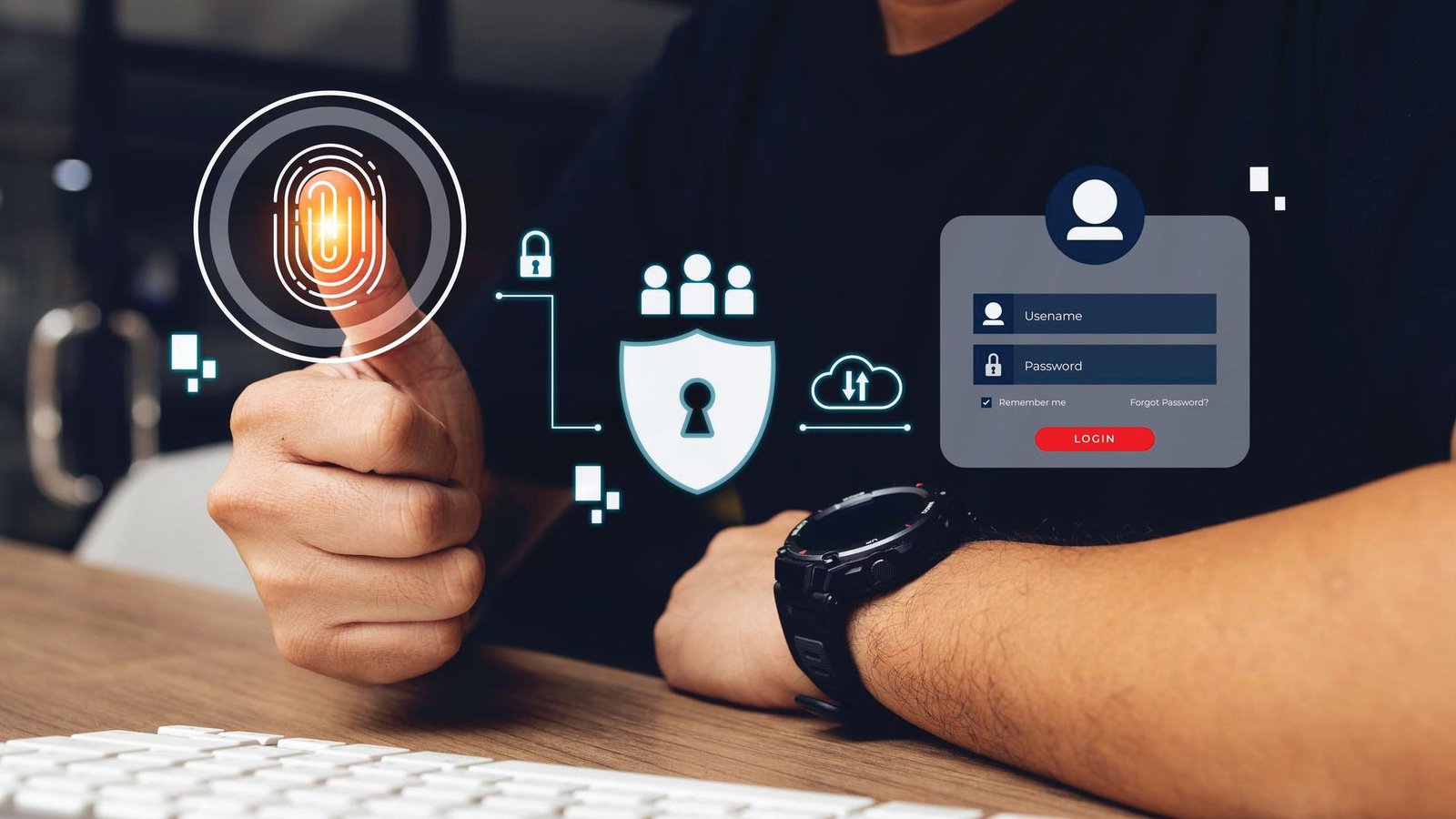
Learn how digital identity and seamless authentication strengthen trust, improve security, and create frictionless user experiences in today’s digital ecosystem.
In the modern, highly networked economy, each click, purchase, and login is a trusting instance. The digital environment is being put under increasing pressure to provide authentication that is frictionless and foolproof as users seek seamless and secure experiences. Online banking, portals in healthcare, and so on, trust is no longer a choice; it is the basis of interaction.
Digital identity and hassle-free authentication have become the twin pillars of such a change, redefining how people establish who they are and how businesses securely authenticate them.
This article discusses the two strategies of establishing a long-term trust in a digital-first ecosystem between digital identity frameworks and affirmative authentication strategies.
Table of Contents:
1. Understanding Digital Identity: Beyond Usernames and Passwords
2. How Digital Identity Enhances Security and User Trust
2.1. Verified Identities as a Barrier Against Digital Fraud
2.2. Enabling Secure Online Transactions Through Trust
2.3. Transparency and Control as Trust Catalysts
2.4. Industry Adoption: A Trust Revolution in Motion
3. The Role of Seamless Authentication in Digital Transformation
4. Cross-Platform Authentication is the Key to Consistency and Security
4.1. The Need for Unified Digital Identities Across Devices
4.2. Overcoming Fragmentation and Identity Silos
4.3. Federated Identity Standards: The Framework of Trust
4.4. Unified Authentication for Enterprise Security and Efficiency
5. Digital Identity Verification for Secure Online Transactions
5.1. Biometric and AI-Driven Verification Techniques
5.2. Reducing Fraud Through Digital Verification
5.3. Compliance as the Trust Foundation
5.4. Automation and Machine Learning for Verification Accuracy
Conclusion
1. Understanding Digital Identity: Beyond Usernames and Passwords
Digital identity is much more than a password or username. It is a combination of biometric identifiers, behavioral cues and authenticated credentials that combined prove that an individual is present online. The layers of this new identity fabric are fingerprints, voice recognition, device metadata and transaction history.
These identifiers are not fixed like the static credentials since they change over time as users interact with the system, thus providing more adaptive and context-aware authentication. This multidimensional identity can be customized, as well as an enhanced security posture in industries that handle sensitive information.
The old systems were based on the use of only one credential- passwords or PINs to gain entry. Nevertheless, these obsolete models were no longer within the threshold of risks in the contemporary world.
Digital identity has become contextual verification, which includes location, device trust, and behavioral patterns. This development makes sure that verification is not only related to who logs in but how and on what.
2. How Digital Identity Enhances Security and User Trust
2.1. Verified Identities as a Barrier Against Digital Fraud
The verified digital identities are the first line of defense in an age of phishing and identity theft. Organizations can avoid impersonation, as well as fraudulent account creation, by attaching individuals to data sources they can trust. Verified identities turn the verification into a strategic approach to cybersecurity rather than a compliance tool.
2.2. Enabling Secure Online Transactions Through Trust
The essence of online commerce security has been reinforced by the Know Your Customer (KYC) and Multi-Factor Authentication (MFA) mechanisms. Multi-layered checks verify users, decrease chargebacks, account takeovers, and data breaches by the business. When incorporated smoothly in transactions, trust turns user experiences into ones of caution to trust.
2.3. Transparency and Control as Trust Catalysts
Customers prefer systems that provide them with visualization and control. Confidence is increased when people can see, control and take back their identity permissions. Open data application creates emotional credibility, an ethical, but essential part of loyalty and long-term involvement.
2.4. Industry Adoption: A Trust Revolution in Motion
In fields like finance, healthcare, and e-commerce, sectors are redefining identity verification as a trust-building factor. Banks simplify the process of onboarding with validated credentials; hospitals facilitate the protection of patient data with the help of digital identity infrastructures; and retailers facilitate loyalty with the help of customized but safe experiences.
3. The Role of Seamless Authentication in Digital Transformation
Clear authentication does away with the tension between security and usability. It makes access adaptive, fast and secure, be it by biometrics, single sign-on (SSO), or passwordless login. At the end of the day, users do not accept fatigue on the logins anymore; smoothness is the new standard of online efficiency. With the digitization of workflows, continuous authentication will be a strategic facilitator. It helps in scaling, assures compliance and leads to a standardized brand experience across platforms. An effective authentication platform can hasten change, as it makes it easier to enter the enterprise without jeopardizing business continuity.
Fluent authentication means a decrease in IT overhead, a decrease in password reset costs, and productivity in the working population. As soon as employees and customers can use the digital systems with ease, agility increases, operational friction decreases, and innovation flourishes. The ease of authentication, therefore, turns out to be a business accelerator rather than a security capability.
Hustle-free log-in is directly correlated to rates of conversion and retention. Research reveals that users leave sites that have tedious authentication processes. By allowing users to sign in fast and securely (with biometric taps, social logins, etc.) when doing business, businesses not only increase their user experience but also improve their revenue performance.
4. Cross-Platform Authentication is the Key to Consistency and Security
4.1. The Need for Unified Digital Identities Across Devices
Consistency in a multi-device world characterizes the satisfaction of the user. Cross-platform authentication enables users to have a single identity when using web, mobile, and IoT environments. It is a medium between convenience and compliance so that security does not disrupt the flow of the user.
4.2. Overcoming Fragmentation and Identity Silos
Organizations are characterized by inconsistent multimedia authentication systems. These silos are not only damaging user experience, but also vulnerable. Centralized identity management simplifies the governance process and increases visibility and minimizes breaches due to fragmented credentials.
4.3. Federated Identity Standards: The Framework of Trust
Federation authentication is based on protocols such as OAuth, SAML, and OpenID Connect. They facilitate safe interchange of data between systems without necessarily having to use redundant logins. This interoperability minimizes friction and makes users have seamless access and at the same time provides an enterprise-grade protection of data.
4.4. Unified Authentication for Enterprise Security and Efficiency
Enterprises can attain efficiencies and consistency when authentication is effective across platforms. Identity systems help in making audits easier, enhancing zero-trust adoption, and compliance. To users, the one trusted identity is one identity universally known and trusted to be safe.
5. Digital Identity Verification for Secure Online Transactions
5.1. Biometric and AI-Driven Verification Techniques
The current forms of verification are biometric and artificial intelligence in the form of a combination to verify the user with accuracy. The use of facial recognition, fingerprint scans and voice scans brings an unquestionable identity to it. The behavioral learning that is sustained through AI is used to identify anomalies and enhance security.
5.2. Reducing Fraud Through Digital Verification
Digital verification lowers account takeovers and synthetic identity fraud in industries such as banking and e-commerce. With transactions being connected to verified digital identities, businesses can avoid fraudulent payments and keep users secure without imposing unnecessary steps on them.
5.3. Compliance as the Trust Foundation
Other regulatory systems like GDPR, PSD2, and eIDAS strengthen the identity checks in the international arena. Compliance also helps organizations safeguard data as well as win user confidence in the transparency and legal processing of data, which are vital aspects of a privacy-conscious world.
5.4. Automation and Machine Learning for Verification Accuracy
Automation takes a shorter time in identity checks and minimizes human error. The machine learning algorithms keep improving the accuracy of verification and can differentiate between legitimate and threat users within milliseconds. Such a combination of speed and intelligence turns authentication into a facilitator of security as well as satisfaction among the user.
Conclusion
Trust is what each interaction entails in the changing digital world. That trust is based on digital identity and seamless authentication, the cornerstones of secure, transparent, and user-first experiences.
A business can only be truly successful once it has transformed its digital transformation initiatives, not just by innovation, but by the trust that the system gives out.
Discover the latest trends and insights—explore the Business Insight Journal for up-to-date strategies and industry breakthroughs!
