
Stop treating career support as a side service. Learn how embedding employability into the core curriculum drives graduate success and ROI.
Gemma Kenyon, as Director of Careers and Employability at City St George’s, University of London, how has your career in higher education shaped your philosophy on preparing students for life beyond graduation?
I’ve always been passionate about the role education plays in shaping someone’s future, and my career in higher education has deepened that belief. Over the years, I’ve seen that academic knowledge alone isn’t enough to help students thrive. What truly makes the difference is the student’s ability to apply that knowledge in real-world settings, to articulate their strengths, and to adapt as industries evolve. My philosophy now centers on embedding employability as a core component of the university experience; not an add-on, but something students develop throughout their studies, so all students benefit.
Your recent survey highlights employability as a deciding factor for university choice—what does this data reveal about how students and families now define the value of higher education?
We recently commissioned a new independent survey with Arlington Research to look into the true value of studying abroad, and the message was very clear. The results show a shift in how students and families define value. It’s no longer just about academic reputation — they’re asking, “Will this lead to meaningful work opportunities upon graduation?”
Of the 1,000 U.S. students and parents surveyed, 87% of participants said employability training is a key factor when choosing a university, and 83% believe international degrees offer a job-market advantage. This tells us that students and their families are thinking practically. They want education that connects to real opportunities where students graduate with the skills, experiences, and confidence to succeed in the workplace.
Career readiness is often seen as separate from academic learning—how can universities integrate employability into degree programs while preserving academic depth and rigor?
Employability and academic rigor can and should be integrated and not treated as separate tracks. At City St George’s, University of London, we’ve designed credit-bearing employability development and professional experience modules that are woven into undergraduate degree programs. These aren’t generic workshops; they’re academically rigorous and aligned with students’ subject areas. We also worked with employers to define our core Graduate Attributes — Always Learning, Connected Professional, Engaged in the world, Technical and Digital, and Creating Impact — which are the skills found to matter most to support students future career success. Embedding these in the curriculum ensures that students graduate with both academic depth and real-world readiness.
It is a helpful model for other universities to follow as it gives students a better understanding of what qualities employers look for and equip them with the career management skills and professional experience to enable them to have long term career success.
Many students now evaluate education through the lens of return on investment—how are expectations around outcomes changing compared to a decade ago?
Many students have higher expectations around careers support ultimately leading to getting what they see as a ‘good job’ because they are more acutely aware of the financial investment they are making in coming to university. This means that we’re seeing an increased focus at a strategic level within many universities on strengthening employability support and seeing it as an increasingly important part of student services. In the UK this is reinforced by the prominence of employment outcomes in league table rankings.
With more U.S. students choosing to complete their entire degree abroad, what is driving this shift from short-term study abroad to full international education pathways?
There are a couple of factors driving this trend. A key one is cost pressures – against the backdrop of the rising cost of US degrees, studying abroad can be cheaper. International universities have also responded to increasing demand from US students by creating more English taught programs and pathway options.
The survey shows strong confidence in international and UK degrees—what aspects of global education contribute most to perceived job-market advantage?
Our survey found that 66% — of U.S. students and their parents surveyed — believe UK degrees are more respected than U.S. ones. That confidence stems from what global education tends to offer: a blend of academic excellence and real-world experience.
Many UK degrees like City St George’s, combine academic study with real-world experience through built-in work placements, strong employer links, and a clear focus on skills that prepare students for the job market. These practical elements are seen as a clear asset when applying for jobs not just at home, but internationally. Students are looking for more than just classroom learning. They want an education that delivers real outcomes and are looking overseas as this is where we thrive.
The UK is also taking a step in the right direction towards normalizing the idea that learning doesn’t stop at graduation with the Lifelong Learning Entitlement (LLE). This enables people to study in smaller, stackable modules over time and on their schedule, tailoring their learning to evolving career needs. At City St George’s, we’re proud to be among the first approved LLE providers, supporting flexible and accessible education that meets students where they are and helps keep them competitive over time.
From an institutional perspective, how should universities rethink employer engagement to ensure students graduate with relevant, real-world experience?
Universities need to work with employers throughout the student journey and not just at the end. That includes bringing them into curriculum design, inviting them into classrooms, and collaborating on real-world projects that help students build the right skills. At City St George’s, we work with industry partners to identify future skills gaps and ensure students gain experience that aligns with emerging trends.
Employers also have a responsibility. They need to be clear about the specific skills they’re looking for in graduates, so that students have the opportunity to develop them during their studies. They should also be proactive in working with universities to create real-world learning opportunities. When both sides engage meaningfully, students benefit from a more connected, career-ready education.
City St George’s has embedded credit-bearing employability modules across undergraduate courses—what impact has this approach had on student confidence and career clarity?
Yes, at City St George’s, our Career Activation Programme is fully embedded into students’ degree courses. These credit-bearing modules may include micro-placements, industry-led consultancy projects, summer internships, volunteering, mentoring and coaching, or preparation for job applications after graduation. The programme includes two types of modules: Professional Experience modules which offer professional experience built into degrees, and Career Focus modules, which provide career education tailored to the student’s subjects. Both are designed to give students meaningful, hands-on exposure to the world of work and support long-term career thinking.
This approach has made a huge difference. What students tell us is that these modules give them space to reflect on who they are, what their strengths are, and what they want to do next. They help build confidence, provide structure, and normalize career exploration as part of the university journey and not just something to panic about in the final year.
Global study is increasingly viewed as a strategic career decision—how does international exposure translate into long-term professional advantages for graduates?
In the increasingly competitive graduate jobs market, students are looking for experiences to help them stand out to future employers and international exposure fits this bill. When we listened to employers about their future skills needs one of the areas that stood out was being ‘engaged in the world’. Indeed, studying abroad helps develop many of the skills employers highlighted such as cross cultural teamworking and communication, resilience and a commitment to going out of your comfort zone to ‘always learn’. In addition to transferable skills, international experience is often seen as a good fit for careers in globally orientated companies who either have offices in multiple countries or sell their products or services globally.
Looking ahead, how must universities evolve their careers strategies to meet rising demands for employability, global mobility, and measurable outcomes in an increasingly competitive education landscape?
Universities need to stop treating career support as a separate, side service, and start recognizing it as central to their mission. That means investing in career education, embedding it throughout the student journey, and aligning with global labor market trends, so students understand what’s to be expected in the industries they’re entering. It also means being transparent about graduate outcomes and holding ourselves accountable. Students are making serious investments in their future; they deserve an education that truly prepares them for it.
A quote or advice from the author: “Education has the power to change lives, broaden horizons, and build global citizens. It is encouraging to see so many U.S. families recognize the unique opportunities and long-term career benefits that come with studying in the U.K. As the university for business, practice, and the professions, City St George’s is committed to helping students thrive in a competitive job market.” — Gemma Kenyon, Director of Employability at City St George’s, University of London

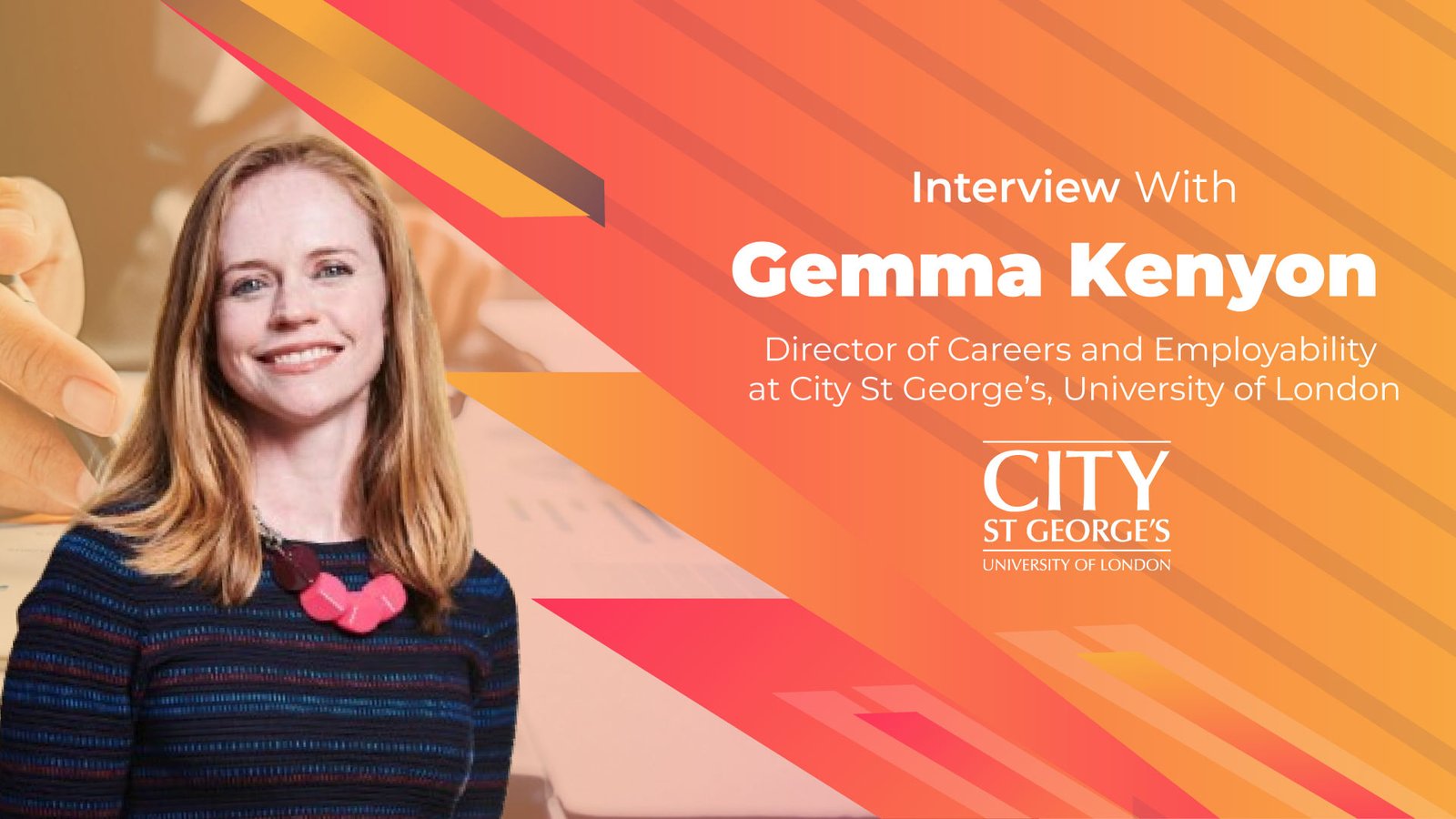
Gemma Kenyon
Director of Careers and Employability at City St George’s, University of London
Kyle Tourjé is a second-generation contractor specializing in structural retrofitting, repair, and geohazard mitigation throughout Southern California. As Executive Vice President of Alpha Structural, Inc., he oversees all engineering and construction operations. Having grown up in the trade and with over 15 years of experience—including personally repairing and inspecting over 6,000 structures—Kyle combines hands-on construction and field engineering expertise with leadership in real estate and disaster response. His work bridges the gap between engineering solutions and the realities of property ownership and management, code compliance, and disaster response. With a background spanning construction, insurance claims, and litigation support, he applies practical solutions to California’s evolving structural, legal, and environmental challenges. Kyle’s focus is on advancing straightforward, lasting solutions that improve safety and resilience for communities across the region. For more about Alpha Structural
