
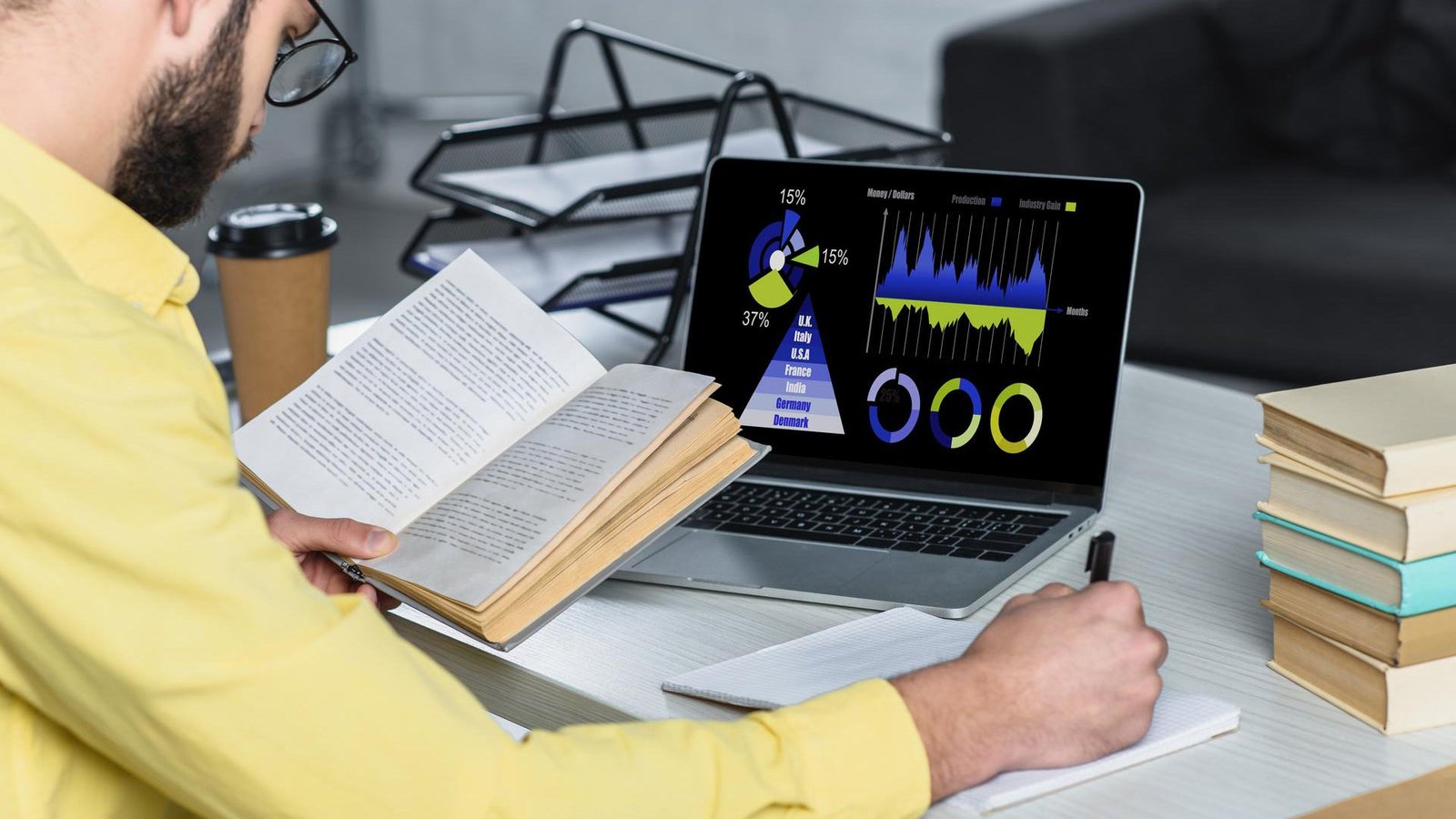
Explore how multimodal learning analytics connects behavior data to learning outcomes, enabling smarter data-driven learning and better outcomes.
Learning is not a black box anymore whereby inputs are fed in, and the output of the same is the results. Rather, it is becoming visible, trackable, and more or less a path of footprints on a terrain. For ages, we have gauged learning by results only. Plunkitts, graduations, diplomas. Simple, clean, and generally deceptive. What the metrics hardly show is how one got there. Did they struggle quietly? Did they explore deeply? Did they make the halfway recovery? Multimodal learning analytics is starting to provide answers to such questions, not through guesswork, but by paying attention to behavior.
1. When Behavior Speaks2. The Moment Data Turns to Insight
3. Being an Investor Before It Becomes a Problem
4. Personalization That Does Not Seem Automatized but Rather Feels More Like a Smart Person
5. Making Sense of the Chaos
6. The Tightrope of Ethics, Interpretation, and Trust
7. Learning That Understands Before It Evaluates
We Already Had the Answers, but Awareness?
1. When Behavior Speaks
Every digital learning environment is constantly humming with signals. A pause before clicking. A rewind on a video. A sudden spike in activity during a complex concept. These moments may seem insignificant in isolation, but together they form a behavioral language.
Researchers like Ryan Baker and George Siemens have long argued that learning analytics should develop better methods for measuring educational progress through its process, which needs to be improved throughout its development. They demonstrate in their educational data mining and learning analytics research that educational outcome assessment requires learning behavior comprehension. The data about behavior functions as evidence of human activities because it reveals their internal intentions. And when multiple forms of this data are captured simultaneously, including interaction logs, eye movement in advanced systems, discussion participation, and even voice tone in immersive environments, we enter the realm of multimodal learning analytics. It’s less like reading a report and more like watching the learning process unfold in real time.
2. The Moment Data Turns to Insight
The change in behavior actually comes after data on behavior is not only observed but also linked to the results. Interestingly, this is where the active rereading of material, interpersonal interaction with each other in a spaced form, or even discussion amongst the students stands a better chance of retention and understanding.
Here the multimodal analytics takes an additional step. It does not just say, Do this act; it works. It asks the question, Under what circumstances, and why?
This fact is imperative, since not all learners can equally successfully perform. There are also those that perform well in explorations and jumping around resources. There are those who draw straight lines with agglomerated force. Once the systems associate the data regarding the behavior with its outcomes on the scale, then the systems begin to realize the difference and make corrections. Education is no longer standardized. It starts getting open.
3. Being an Investor Before It Becomes a Problem
Among the strongest points of relating behavior data to outcomes is the opportunity to understand the problems prior to their appearance in the outcomes. The early warning systems have been demonstrated in studies conducted by EDUCAUSE and other organizations to indicate that a slight change of behavior usually signals a loss of performance. When a learner is slowly shrinking their interaction, has more hesitations, or moves in a jerky manner, it might be an indicator of being lost or disoriented.
Not dramatic signals are these. They are whispers. But multimodal analytics is geared to listen to whispers. And when it does, it facilitates intervention in time. Not failure, but failure in advance. This alters the position of teachers and systems altogether. Reactive responders make the transition to proactive guides.
4. Personalization That Does Not Seem Automatized but Rather Feels More Like a Smart Person
Personalization is not the same as mechanical personalization and intuitive personalization. The former suggests content since this is watched by people like you. The latter is flexible since it knows your way of learning. The multimodal learning analytics incline towards the second.
Through constant behavioral analysis and correlating the behavior to the results, systems are able to modify learning paths in a manner that is nearly natural. Difficulty levels shift. Content formats adapt. Feedback comes at the opportune time. The basis of such responsiveness is multimodal analytics. It is not about coming up with smarter systems. It is of making more simple-minded ones.
Naturally, none of this can be accomplished without the capability to process large and complicated streams of data. It is at this point that AI comes in handy. Machine learning models are more efficient in establishing patterns in multimodal data, patterns that would be too complex to analyze manually. They are able to identify hidden correlations, forecast results, and keep advancing their knowledge in the course of additional information.
Scholars who have worked on the concept of AI in education, such as those involved in conferences related to the topic, such as AIED (Artificial Intelligence in Education), have shown how predictive algorithms can be used to predict student success by behavioral indicators much earlier than conventional evaluation methods would. However, more to the point, AI allows taking action in real time. Insight is valuable. Short-term wisdom is revolutionary.
6. The Tightrope of Ethics, Interpretation, and Trust
As powerful as this approach is, it is associated with its tensions. Gathering dense data of the behavior is associated with the issue of privacy and consent. Analysis of such data brings about the chances of being biased or judging it wrongly. Both learners and educators are required to put their faith in it. In reference to the use of learner data, the OECD in its deliberations on data in education points to the need to have transparency and ethical standards. In lack of them, even the most developed systems will lose their credibility.
It is also more deeply challenged. Action is not necessarily synonymous with significance. A learner may seem inattentive, yet he/she may be thinking. Some others would look active but be skimming on the surface. Multimodal analytics is less ambiguous, but not zero. That is why human judgment still counts. Patterns can be shed some light by technology. It is not able to completely substitute interpretation.
7. Learning That Understands Before It Evaluates
Given current trends, multimodal learning analytics outcomes will approach real-time comprehension even more closely. As the immersive technologies are integrated, more intense data streams will arise. With emotional prompts, spatial interactions, and collaborative processes all contributing to the same analytical cloth. The goal is not surveillance. It is sensitivity.
To design systems that have the capability of identifying when a learner is struggling, engaged, curious, or overwhelmed and responding in a manner that enables and does not standardize. Learning outcomes will not be the only success measure anymore in that future. It will be no less about the voyage itself.
We Already Had the Answers, but Awareness?
For a long time, education has been obsessed with answers. Right or wrong. Pass or fail. Multimodal learning analytics introduces a different kind of question. It wasn’t asking, Did the learner succeed? Instead it was asking, What happened along the way? Because in those in-between moments, the pauses, the retries, and the unexpected detours lies the real story of learning. And now, for the first time, we have the tools to read it.
Discover the latest trends and insights—explore the Business Insight Journal for up-to-date strategies and industry breakthroughs!
