
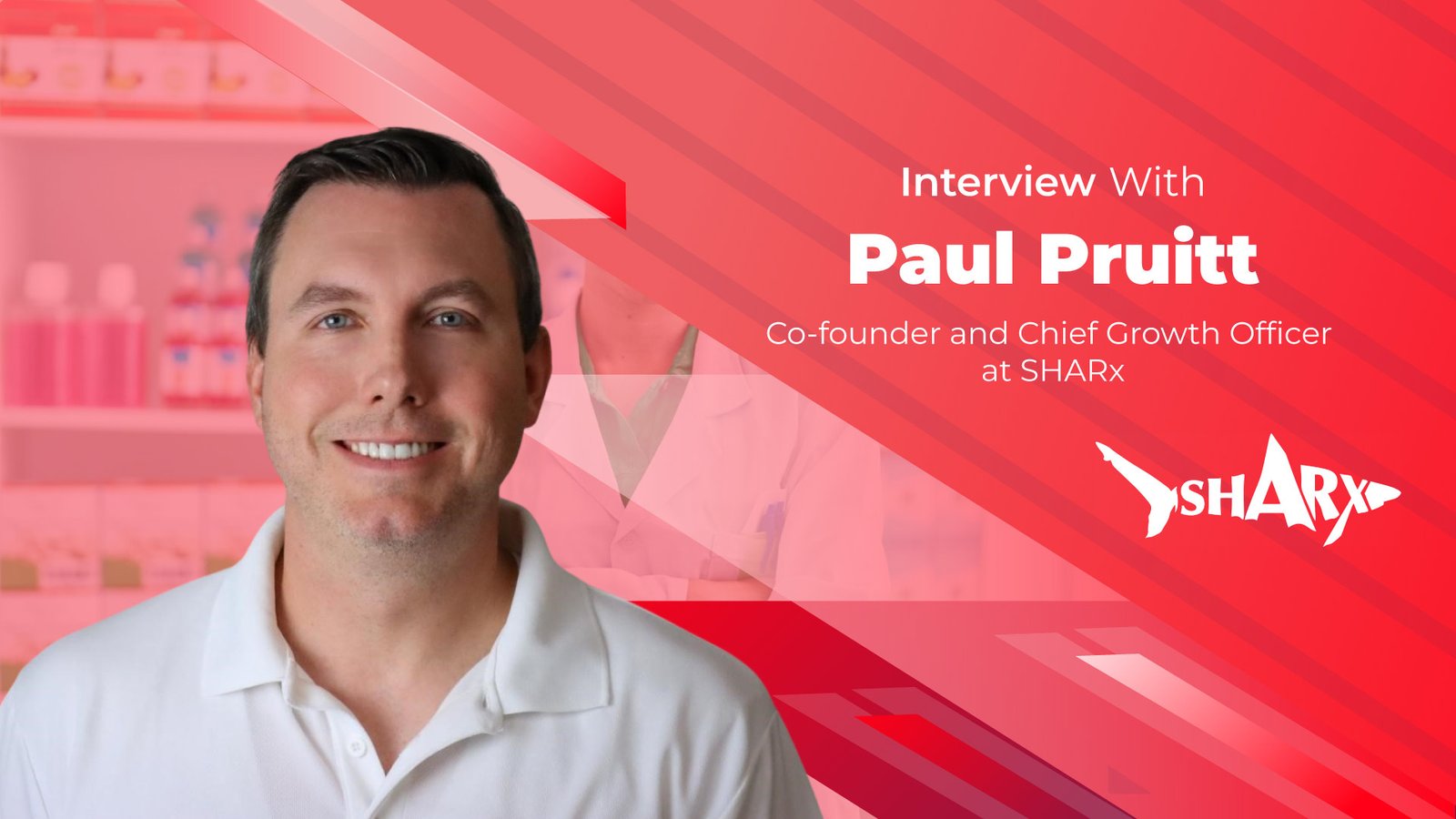
Paul Pruitt of SHARx shares insights on drug pricing transparency, PBMs, and improving medication affordability in the U.S.
Welcome to Business Insight Journal, Paul. We’re delighted to have you. To start, could you share a bit about your professional journey — what led you to co-found SHARx, and what inspired your mission to address drug affordability in the U.S.?
For over a decade, I worked directly with employers by providing guidance on how to keep their healthcare costs as low as possible while offering the best level of benefits for their employees. I found that most employers cared deeply about their employees and wanted to offer benefits that attracted and retained top talent. What became increasingly obvious over that time, and remains true today, is the impact that medications have on driving up healthcare costs. The compounding effect of rising brand-name drug costs and higher member utilization placed an unsustainable financial burden on employer-sponsored health plans. I was always on the lookout for solutions to help my clients, but there was no meaningful way to address this out-of-control situation.
In 2016, I found out that my two boys were diagnosed with a rare genetic condition called Cystinosis. Although the availability of effective treatments is a tremendous blessing, the process of obtaining these lifesaving medications proved to be difficult, frustrating, and costly. My experience navigating the healthcare system has highlighted the persistent challenges and financial burden families face when trying to secure the specialized care they need. I found out the hard way that having insurance did not mean having access, as I began to use my own health insurance offered by my employer. Thankfully, I learned tips from other parents on what resources are available for my family and gained a new understanding of what was possible for others navigating situations just like mine.
The U.S. healthcare landscape is facing an ongoing drug affordability crisis. In your view, what are the core factors driving this issue, and why has transparency in drug pricing remained so elusive?
There is a lot of profit to be made when there is opaque pricing. What we see in healthcare is that consolidation and vertical integration drive costs up by removing competition and creating misaligned incentives. The top 3 pharmacy benefit managers (PBMs) have 80% of the market share and own the pharmacies they require you to use. Employers believe that their PBM’s job is to keep their costs down and manage their risk, but that couldn’t be further from the truth because if they did that, it would mean less profit for them and their shareholders.
One of the biggest contributors to escalating drug costs is rebates. Rebates are paid to the PBM by the manufacturer for access to the PBM’s membership. A PBM’s formulary is designed to maximize these rebates for the PBM and is unrelated to the value of the treatment. Up to 60% of the price of brand medications is paid as a rebate. In any PBM contract with an employer, the rebates are guaranteed to increase each year, which requires that pricing go up to allow them to honor this commitment. In any other industry, this practice would be considered bribery, but there are exceptions to this practice in healthcare, which has proven to be a huge catalyst driving up the cost of medications.
Pharmacy benefit managers (PBMs) and alternative funding programs (AFPs) have come under increasing scrutiny. How do these intermediaries contribute to inflated drug costs, and what kind of oversight or reform do you believe is necessary to create a more transparent system?
Both PBMs and AFPs profit when pricing goes up. PBMs utilize a sophisticated range of revenue streams, including spread pricing, manufacturer rebates, and administrative fees, while further maximizing margins through vertically integrated pharmacies that capture additional profits from every medication dispensed. AFPs profit from the high cost of the medications as they charge a percentage of the savings to their clients.
Rebates function like illegal bribes but are somehow exempt from the anti-kickback statutes. Correcting this flawed system will cause a significant correction to the market and remove the incentives for PBMs to favor higher-priced drugs over lower-priced drugs.
The ideal system is one that is value-based, where pricing is correlated to the efficacy of the treatment. Transparency is a critical component in determining value.
The pass-through pricing model has been gaining attention for its potential to simplify and clarify drug pricing. How does this model disrupt the traditional profit structure of PBMs and AFPs, and in what ways can it help employers predict and stabilize long-term healthcare budgets?
One of the revenue sources for PBMs is the spread pricing of the claims they adjudicate. Transitioning to an admin fee creates clarity for the plan sponsor and allows them to determine value within their PBM relationship. The majority of the PBM revenue does not come from spread pricing. Spread pricing is most prevalent on generic medications, but those only represent 10-15% of a plan sponsor’s costs in my experience. Seeing as brand medications are where employers experience the largest increases in their claims cost each year, I don’t expect that pass-through pricing is going to make much of a difference on its own.
SHARx operates on a fully transparent, pass-through model. Can you elaborate on how this approach works in practice and how it improves both affordability and accessibility for members?
In my experience, having insurance does not equate to having access to medications. At SHARx, we provide access to affordable medications for members who lack insurance coverage. We are transparent with our program fees in our agreements with employers, and our success relies on knowing how to assist our members in obtaining their needed medications at the lowest price possible. Most members that we assist have their medications delivered to their door for much less than any copay or deductible they would have paid using insurance.
Ethics and compliance are critical in pharmaceutical sourcing. How does SHARx ensure its processes remain fully compliant and ethically sound while avoiding the conflicts of interest common in traditional pricing models?
The current system profits when pricing goes up, and volume goes up, which is the very definition of a conflict of interest. While employers generally engage Pharmacy Benefit Managers (PBMs) with the expectation of fiduciary oversight and cost mitigation, the traditional PBM business model often creates a fundamental conflict of interest where genuine cost-reduction efforts would directly diminish the PBM’s own profitability and shareholder returns. We would expect to see costs under control, but instead, we see double-digit price increases every year for brand medications, and employers are beginning to realize the reality of the situation.
At SHARx, we tap into the open market to locate the most affordable pricing for high-cost medications. Our admin fee is disclosed and does not include the traditional conflicts of interest. We desire to create incredible member experiences so that our clients can feel confident when they make the decision to exclude medications from coverage and partner with SHARx to take care of their employees whom they care about.
Pharmaceutical manufacturers are excellent at providing the medicines Americans need. The problem is that access to them is controlled by profit structures that don’t serve patients. We built SHARx to remove that barrier and return control to patients and the employers who are paying for healthcare benefits.
Drug prices continue to fluctuate, putting financial pressure on employers and employees alike. How does SHARx help employers safeguard against these market swings without compromising access to essential medications?
We work with employers that have made the tough decision to exclude coverage for high-cost medications, which allows them to avoid these price hikes and financial pressures on both their sustainability and what their employees experience with premiums and out-of-pocket expenses. Many employers that have worked with SHARx for a while have successfully kept employee premiums flat and have found their employees seek them out to express their appreciation of allowing them to work with SHARx for their medications. We have heard of several cases where employees had to make choices to buy groceries or fill their medications prior to working with SHARx, and now they no longer must decide between food and medicine.
On a personal note, what guiding strategy or leadership philosophy has helped you navigate the challenges of transforming such a complex and highly regulated industry?
Prior to founding SHARx, I was working directly with employers on their benefit programs and I had a focus on compliance as that is such a difficult thing for any employer to keep up with. Part of what has made SHARx successful is understanding what challenges our clients and broker partners face in navigating the health insurance environment. We believe in fighting for what is right, even when that is the hard thing to do.
What advice would you give to healthcare leaders or employers who are looking to adopt more transparent and sustainable approaches to managing prescription drug costs?
My advice is to question everything and challenge the embedded assumptions that go into making health insurance decisions. Healthcare is the only place where the tenets of capitalism are not in play for the user of the service or the payer of the service. If bigger was better, then why are your costs still going up, and why are smaller organizations able to control their spend better than the larger organizations?
Finally, Paul, any closing thoughts you’d like to share with our readers about the future of drug pricing transparency and the broader movement toward affordable healthcare access?
It is great to see so many parties talking about this problem as it affects countless Americans. I’m hopeful that we continue to see the changes needed by Congress, the states, and through private innovation that work to make healthcare affordable.

Paul Pruitt
Co-founder and Chief Growth Officer at SHARx
Paul Pruitt is the Co-founder and Chief Growth Officer at SHARx and a key driver of the company’s rapid expansion. With experience across operations, finance, and benefits consulting, he began his career as COO and CFO at a boutique employee benefits firm and later specialized in self-funded health plans for a bank-owned agency.
Paul’s mission is shaped by personal experience: two of his children were diagnosed with a rare orphan disease, giving him a dual perspective as an industry expert and parent navigating high-cost therapies. This fuels his commitment to fair prescription pricing and high-touch member support.
About SHARx:
SHARx was founded to fight back against the broken system of overpriced prescription drugs. Industry pioneers Corey Durbin and Paul Pruitt built SHARx to put people before profits. With an innovative and ethical sourcing model, SHARx cuts through the waste with radical transparency, common-sense cost containments, and a member-first approach. No hidden markups. No games. Just the meds people need, delivered affordably, reliably, and with dignity. For more information, please visit https://sharxplan.com/
