
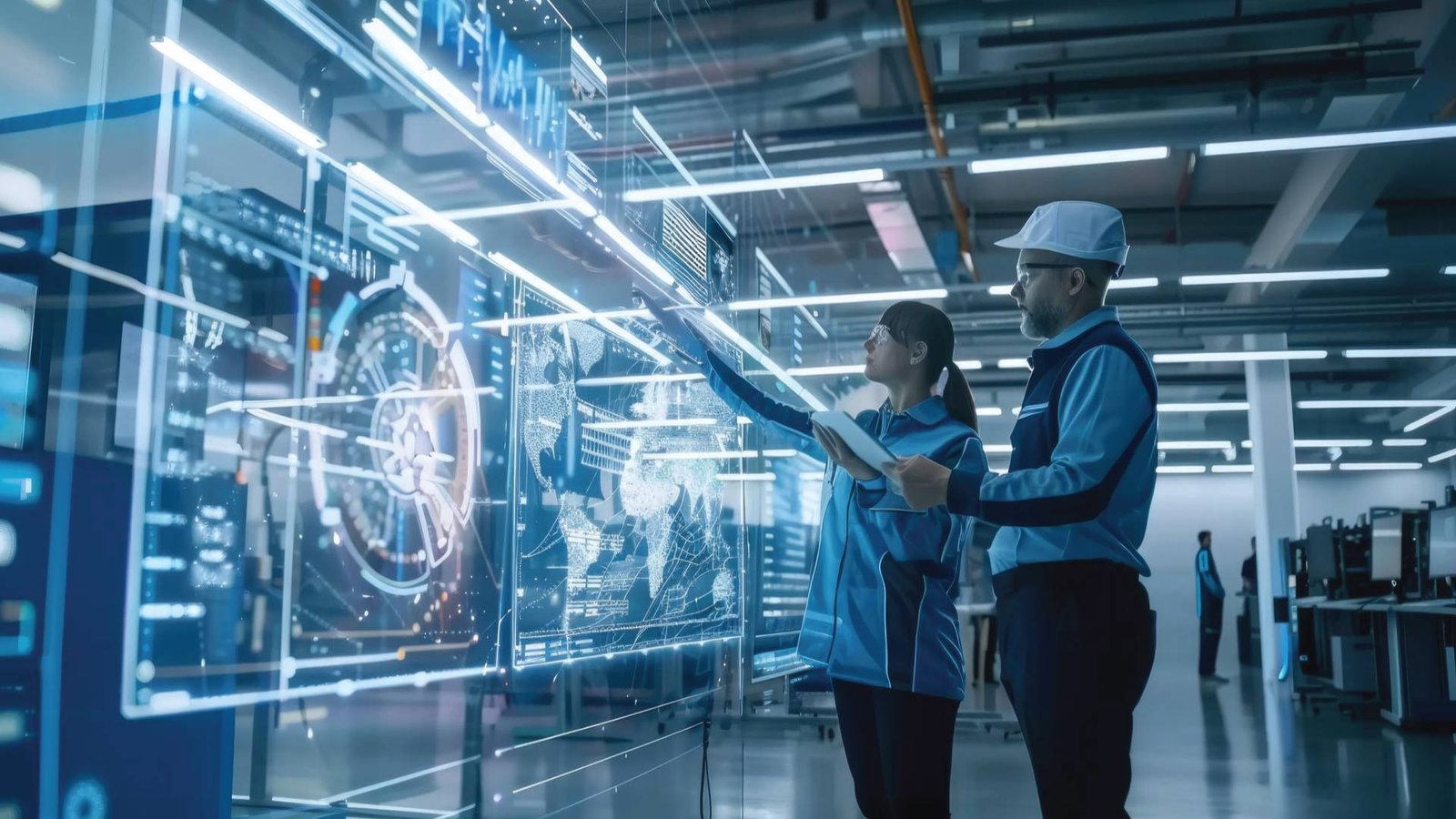
Discover how digital twins enhance predictive maintenance and operational efficiency through real-time asset monitoring, simulations, and data-driven insights.
As industrial enterprises face rising asset complexity, tighter margins, and increasing uptime expectations, traditional maintenance and operational models are no longer sufficient. Virtual representations of tangible resources, systems and processes, the digital twins are becoming an essential technology of predictive maintenance and operational efficiency.
Through integrating real-time sensor results, sophisticated analytics, and virtualization, digital twins help companies transition to proactive, insight-based operations as opposed to reactive ones and schedule-driven operations.
In the case of B2B manufacturers and industries with high investment in their assets, digital twins are not a mere upgrade of technologies, but a strategic tool of resilience, cost-efficiency, and competitive edge in Industry 4.0 environments.
Table of Contents:1. Digital Twins Foundations for Predictive Maintenance
1.1 Understanding Digital Twin Architecture and Real-Time Monitoring
1.2 Optimizing Predictive Maintenance Models and Failure Forecasting
1.3 International Case Studies Demonstrating Predictive Maintenance Value
2. Digital Twins Driving Operational Efficiency Across Industrial Ecosystems
2.1 Process Optimization and Production Performance Enhancement with Digital Twins
2.2 Cost Optimization, Energy Efficiency, and Resource Utilization with Digital Twins
2.3 Enterprise-Scale Digital Twin Deployments and Business ROI
3. Strategic Implementation, Technology Enablers, and Industry Adoption Pathways
3.1 Technology Stack focusing on IoT, AI, Cloud, and Simulation Platforms
3.2 Organizational Transformation and Data Governance in Digital Twins
3.3 Future Industrial Outlook and Competitive Differentiation of Digital Twins
Conclusion
1. Digital Twins Foundations for Predictive Maintenance
1.1 Understanding Digital Twin Architecture and Real-Time Monitoring
A digital twin is a digital model of a physical object or system, which is executed based on real-time operation data.
The digital model has already been applied in the manufacturing and industrial systems, and it also integrates the data gathered by the IoT sensors, control systems, and operational technologies and computes it to monitor the parameters such as vibration, temperature, pressure, and energy consumption.
This information is sent to cloud or edge computing, where simulation models and analytics engines decipher asset behavior.
In contrast to the traditional monitoring dashboards, digital twins put the data into context in a virtual description of the asset, which enables the enterprise to not only know what is going on, but why. This real-time visibility helps maintenance and operations teams to identify performance anomalies in time, track the pattern of degradation, and have an ongoing digital record of the health of the asset throughout its lifecycle.
1.2 Optimizing Predictive Maintenance Models and Failure Forecasting
One of the most trade-orchestrated, as well as impactful, commercial applications of the digital twin technology is predictive maintenance. The conventional preventive maintenance is based on a predetermined schedule that may lead to unwarranted maintenance or even failures. This approach is substituted by data-driven maintenance models using digital twins that provide predictions of failures depending on the real-life conditions of the asset.
Digital twins are used to predict trends related to component wear, misorientation, or fatigue by using historical data on historical performance and real-time sensor data. These models have the capability of estimating the remaining useful life of critical parts and suggesting the best maintenance periods. In the case of manufacturers, this would translate to fewer unexpected downtimes, better maintenance planning and better spares. Digital twin-driven predictive maintenance also helps to operate in a safer manner by tracking the risk of failures before turning into safety incidents or loss of production.
1.3 International Case Studies Demonstrating Predictive Maintenance Value
Digital twins have also shown quantifiable predictive maintenance value across the world’s industrial markets. Digital twins have been applied in progressive manufacturing settings by electronics and automotive manufacturers to supervise high-speed production machinery to minimize unforeseen downtimes and enhance equipment dependability. Digital twins are used in heavy industrial organizations by the mining and energy industries to track large-scale rotating equipment and mobile assets to prevent early faults and prolong the life of assets.
According to industrial leaders who apply digital twins in maintenance, the unplanned downtime can decrease up to 30-40% and the maintenance expenditure may decrease up to 10-20%. These results have a direct effect on the continuity of operations and profitability. Notably, predictive maintenance due to a digital twin also enhances the work of engineering, maintenance, and operations teams through the creation of a collective and data-driven perspective on the performance of the asset in all plants worldwide.
2. Digital Twins Driving Operational Efficiency Across Industrial Ecosystems
2.1 Process Optimization and Production Performance Enhancement with Digital Twins
In addition to maintenance, digital twins are also crucial to the optimization of industrial processes and performance in production. Digital twins provide organizations with the ability to make changes to processes, detect bottlenecks, and estimate performance improvements by simulating an entire production line or a plant to determine if they improve performance before applying them to the physical world.
Digital twins can be used by manufacturers to simulate throughput scenarios, adjust production sequencing and redistribute workloads between machines. These are simulations used to mitigate the cycle time, enhance the overall equipment performance (OEE), and decrease process variability. Digital twins can also be used to carry out what-if analysis in complex industrial ecosystems, where leaders can evaluate the operational consequences of demand fluctuations or equipment upgrades, or disruptions in the supply chain. This will make enterprises more agile and enable them to make quicker and more assured decisions in operations.
2.2 Cost Optimization, Energy Efficiency, and Resource Utilization with Digital Twins
The industrial enterprises are most concerned with their cost control and sustainability, and the digital twins directly contribute to both of these. Being able to offer a precise overview of how energy is used, material movement, and the effectiveness of equipment, digital twins are useful to organizations in revealing unknown areas of inefficiency and minimizing waste.
Digital twins are used in energy-intensive industries to track energy consumption on the asset and process level to implement optimization strategies to minimize utility costs and carbon emissions. Digital twins also enhance the better use of resources by matching the production time with the availability of assets and the maintenance needs. The efficiencies are multiplied over time, which results in long-term cost savings and contributes to the environmental, social, and governance (ESG) objectives. In the case of B2B organizations, the capability to directly connect the benefits of operational efficiency with financial and sustainability results bolsters the business case of the digital twin investments.
2.3 Enterprise-Scale Digital Twin Deployments and Business ROI
With the maturity of digital twin initiatives, organizations are moving beyond the deployment of single assets into enterprise-wide ecosystems. Digital twins on an enterprise scale combine manufacturing processes, supply chains, and maintenance into a single digital platform. This integrated visibility allows the executives to make the performance and strategy of operations consistent.
Financially, companies are registering high ROI of digital twin programs, which are fuelled by less downtime, better use of assets, decreased maintenance expenses and high production volumes. Digital twins also lead to improved decision-making and quality and reduce the likelihood of costly operational mistakes. Enterprise-scale digital twins, which bring consistency in factories, are subject to standardized best practices and centralized performance benchmarking, and are significant to global manufacturers in the highly competitive industrial markets.
3. Strategic Implementation, Technology Enablers, and Industry Adoption Pathways
3.1 Technology Stack focusing on IoT, AI, Cloud, and Simulation Platforms
The implementation of a digital twin requires a scalable and strong technology stack to be successful. The basis is provided by IoT sensors, which record quality operation data and edge computing, which allows real-time processing of latency-sensitive applications. Cloud computing offers the level of scalability needed to store, analyze and visualize large quantities of data within multiple assets and facilities.
Predictive insights are created with the help of artificial intelligence and machine learning models, whereas simulation and visualization tools allow testing scenarios and conducting virtual experiments. It can be integrated with enterprise systems to include ERP, EAM, and MES so that digital twin insights are converted into business decisions. Enterprise adoption and long-term scalability require that the platforms are selected as interoperable and secure.
3.2 Organizational Transformation and Data Governance in Digital Twins
The use of digital twins is not only a technological change but an organizational change as well. To achieve the maximum value of digital twins, enterprises need to eliminate IT, operations, maintenance, and engineering silos. Data governance systems are important to maintain the quality of data, ownership, security and compliance with regulations.
Another major success factor is the upskilling of the workforce. The engineers and operators should be trained to read digital twin insights and apply them in the daily decision-making process. Change management and alignment of leadership are the key factors that will help to get people on board and eliminate resistance. Companies that make digital twins a strategic ability, as opposed to a project, will have higher chances of creating a long-term impact.
3.3 Future Industrial Outlook and Competitive Differentiation of Digital Twins
Going forward, industrial competitiveness will revolve around digital twins. Digital twins will become more predictive, autonomous, and scalable due to the development of AI, physics-based modeling, and real-time simulation. Digital twins will become more and more popular to support autonomous maintenance, self-optimizing production systems, and intelligent supply chains in businesses.
In terms of competition, companies that invest in the early development of digital twins achieve structural benefits: increased resilience of operations, accelerated innovation processes, and better cost management. Digital twins will also be used to strengthen B2B relationships as customers and partners insist on increased transparency, reliability, and sustainability. The second stage of Industry 4.0 is the transfer of digital twins to strategic resources, determining the competition of industrial businesses and their development.
Conclusion
Digital twins have introduced a new meaning of how industrial organizations ought to address predictive maintenance and operational efficiency. By combining real-time monitoring, advanced analytics, and simulation, this digital model can enable manufacturers to reduce downtimes, optimize resources, and make smarter business decisions. It requires investment in technology, skills and governance, but long-term returns are massive.
Digital twins are not considered as an option anymore, but rather strategic assets in an increasingly data-driven industrial environment, which is often B2B and asset-intensive manufacturers.
Discover the latest trends and insights—explore the Business Insight Journal for up-to-date strategies and industry breakthroughs!
