
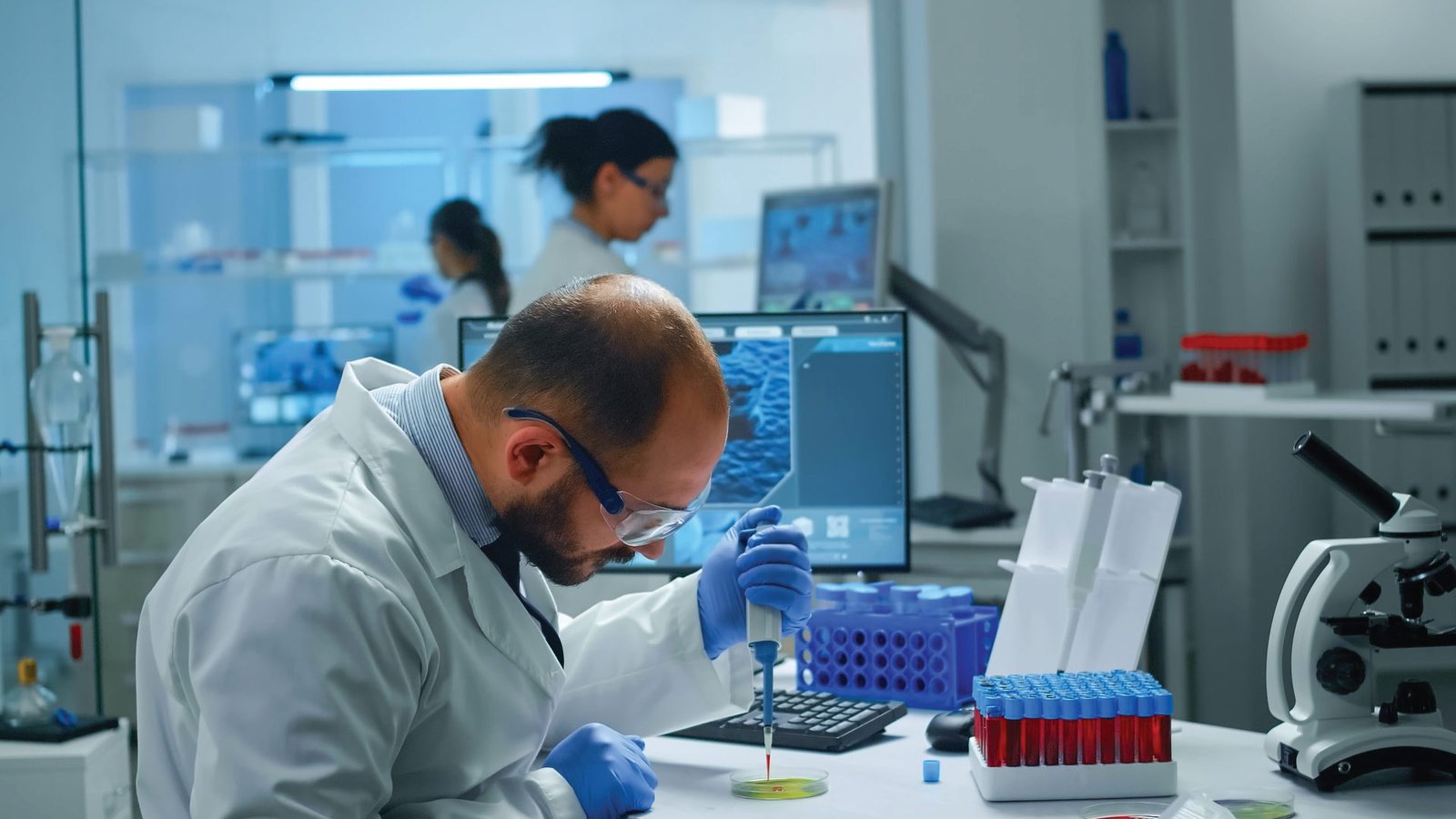
Explore modern drug development processes, from AI-driven discovery and adaptive clinical trials to regulatory innovation, accelerating safer therapies to market faster.
Development of new pharmaceutical drugs has been one of the most complicated and expensive activities in modern science. It is said that on average, 10-15 years and billions of dollars are spent before a product makes it to the patients. The whole process isn’t just monetarily draining but also a medical miracle, creating massive multinational clinical trials and regulatory approval.
Technological development, biological knowledge, and international partnerships have led to some progress in some quarters of the research, but the high attritions and increased expenditures persist in frustrating the sector.
The article discusses modern drug development sequentially, with a focus on regulation, clinical plan, cost economics, and international case studies and their essential statistics.
Table of Contents:1. Foundations of Drug Development
1.1 The Journey of R&D from Discovery to Development
1.2 Excellence in Screening and Safety with Preclinical Research
1.3 International Innovation and Public‑Private Initiatives
2. Clinical Development and Regulatory Pathways
2.1. Objectives and Metrics Beginning with Phase I to III Clinical Trials
2.2 Regulatory Review and Approval Systems
2.3 Global Case Studies: FDA, EMA & UK Approvals
3. Economics, Challenges & Future Directions
3.1 Cost, Risk and Attrition in Drug Pipelines
3.2 Emerging Trends in Clinical Innovation
Conclusion
1. Foundations of Drug Development
1.1 The Journey of R&D from Discovery to Development
It takes a lot of time to develop a drug before human testing. Researchers establish biological targets of disease modulation, screen compounds and refine leads towards safety and efficacy. The discovery phase can be several years long and is succeeded by preclinical development in which compounds are tested in lab and animal models and toxicity and pharmacological profiles are established. It is only a fraction of the candidates that pass through this extreme process; industry statistics indicate that only approximately 1 out of every 5,000 compounds that enter the process of discovery becomes a drug approved for use.
A significant bottleneck is preclinical success: extensive pharmacokinetic and toxicity testing will be necessary to present an appropriate safety margin before humans may be permitted to be tested. At this point, the anticipated price has already become a portion of the multi-billion-dollar outlay that defines the contemporary pharmaceutical research and development.
1.2 Excellence in Screening and Safety with Preclinical Research
Preclinical trials entail complicated tests and models in order to determine safety as well as possible therapeutic advantage. This is not just aimed at identifying the possibility of a compound being safe in humans, but also to set dosage levels and predict side effects. The conventional estimates state that it costs an average of 2.6 billion dollars to develop a new type of drug, which incorporates long preclinical tests and late-stage development failures.
The pharmaceutical industry has a vast global R&D expenditure of more than $300 billion each year, as a result of continued investment in early-stage research within North America and Europe. A significant portion of this spending is concentrated in the United States alone, and it is the engine of much of the drug pipeline in the world.
Preclinical research is risky business; even promising compounds can be discontinued following unexpected safety events or poor efficacy in vivo, which is part of the attrition that characterizes drug discovery in the 21st century.
1.3 International Innovation and Public‑Private Initiatives
In order to overcome bottlenecks and speed up research at an early-stage, international collaboration has come about. The European Union has formed an innovative Medicines Initiative (IMI), with a budget of 2 billion euros, to direct pharmaceutical discovery through Europe and enhance its competitiveness.
These programs facilitate collaboration between academia, industry, and regulators to share information, unify the standards of research, and share the experience. Such collaborative structures assist in eliminating duplication and create new avenues in which the drug candidates can advance to clinical trials at an accelerated pace.
2. Clinical Development and Regulatory Pathways
2.1. Objectives and Metrics Beginning with Phase I to III Clinical Trials
After overcoming preclinical challenges, a compound undergoes clinical development, including human tests, Phase I, II, and III. Phase I concentrates on safety and dosage of a limited number of healthy volunteers or patients. Although the success rates differ depending on the therapeutic field, industry statistics show that less than 12-13% of drugs in Phase I succeed in obtaining regulatory approval.
Phase II trials increase the sample size to dozens or hundreds of patients and initiate the testing of the efficacy and safety. Failure of many candidates to pass through this is common because of no therapeutic effect or unacceptable side effects. Meta-analyses indicate that approximately 30-40% of applicants successfully pass through Phase II to Phase III.
Phase III trials are large trials, which usually involve multiple centers, and are aimed at confirming clinical benefit and also conducting additional analysis of safety in varied populations. Although these studies are expensive and large, success rates have proven challenging and many compounds have not been able to meet endpoint success or have been hampered by regulatory challenges. Historical composite approval probabilities are around 10-13% across all stages of clinical and all regulatory submissions.
2.2 Regulatory Review and Approval Systems
Following successful clinical tests, sponsors assemble information into a New Drug Application (NDA) or similar dossier to undergo an examination by the regulatory bodies. The FDA conducts a stringent review of safety, effectiveness and manufacturing quality in the United States. In a like manner, the European Medicines Agency(EMA) facilitates the coordination of approval amongst EU member states and the MHRA in the UK operates independently after Brexit.
Such agencies are also provided with expedited routes – e.g., the Priority Review, Accelerated Approval and Breakthrough Therapy designations that can cut down the time taken to review a drug meeting unmet medical needs. The expedited routes have played key roles in speeding up the delivery of therapies to patients, especially in fields such as oncology and rare diseases, where patients are urgently required.
On top of this innovative thinking, the regulation is very rigorous and the government has to be careful on the one hand to access but on the other hand to have an excellent evidence of more benefit than harm and that is why the approval cycle is very long hence the modern pharmaceutical environment consists of criteria like being very careful on the one hand and have excellent evidence of more benefit than harm on the other hand.
2.3 Global Case Studies: FDA, EMA & UK Approvals
In developed markets, there is a trend of diminishing predictability of drug development outcomes, and they are more or less alike. Indicatively, the agreement between Swissmedic, EMA and FDA has high concordance in drug approval decisions, implying that there is a congruence in the scientific standards of jurisdictions.
Drug development is global, as evidenced by several recent approvals. Regulatory agencies have granted approvals in 2024 on novel receptor-targeted therapies and advanced biologics, which provide new treatments for cancer and neurological diseases, many of which are a result of multinational clinical programs.
These case studies demonstrate that harmonized international standards and common scientific platforms are essential in developing therapies via the clinical pipeline to patients in Europe, North America, and elsewhere.
3. Economics, Challenges & Future Directions
3.1 Cost, Risk and Attrition in Drug Pipelines
The financial risk involved in the development of drugs is overwhelming. The cost of a single successful drug in clinical trials is over 1 billion alone and the Phase III trials take the greatest portion of the cost and most of the failures add to sunk costs.
The high rates of attrition mean that most compounds fail before even reaching human trials, and so the companies have to balance portfolios with a large number of candidates, with a small percentage of them recovering their development investments.
3.2 Emerging Trends in Clinical Innovation
To enhance efficiency and results, the industry is becoming more inclined to adopt adaptive trial designs, digital tools and real-world evidence in order to maximise the performance of studies. Candidate selection is also quickening in silico trials and model-based drug development and shortening the time to clinical milestones.
The future of pharmaceutical research will follow the global partnerships, data exchange, and standardization of regulations, which will allow more specific treatment and quick access to patients across the globe.
Conclusion
The contemporary drug development is a high-stakes, high-complexity business that incorporates science, regulation, and economics in the global markets. Since the initial discovery and preclinical testing, all the way to the commercial launch of a new therapy require the strict evidence base, substantial investment, and careful innovation. The pharmaceutical industry is gradually becoming efficient without jeopardizing patient safety as international regulatory agencies collaborate and develop further trial procedures. In the ever changing world of emerging technologies and international research networks, drug development is bound to become more and more balanced between speed, cost, and scientific rigor in an attempt to meet unmet medical needs.
Discover the latest trends and insights—explore the Business Insight Journal for up-to-date strategies and industry breakthroughs!
