
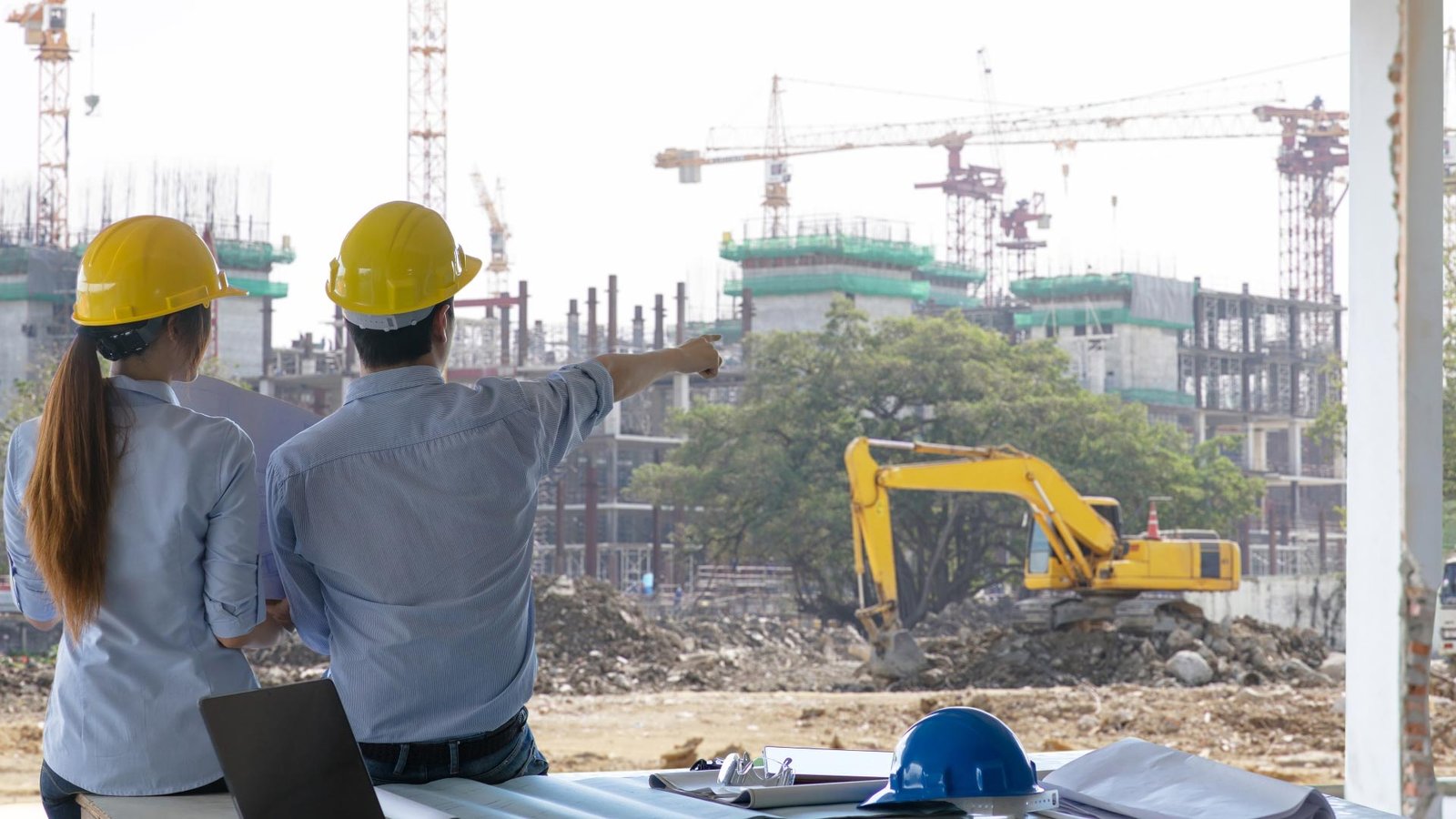
Explore industrialized construction: lean production, modular mass-assembly, and off-site fabrication for faster, cost-efficient, and sustainable building projects.
The industrialized construction is transforming the delivery process of large-scale buildings and infrastructure, moving the industry out of the discontinuous, site-dependent processes to manufacturing-driven, repeatable delivery processes. This change is strategic rather than operational to leaders of construction executives, project directors, developers and policy leaders.
Lean production offers the rigor to get rid of waste and make production more predictable. Modular mass-assembly and off-site fabrication allow speed, quality, and control costs at scale. With labor deficiency, sustainability pressure and margin tightening in world markets, industrialized construction is becoming a compelling competitiveness, sustainability and long-term value generation driver.
Table of Contents:
1. Lean Production as the Operating System of Industrialized Construction
1.1 From Craft-Based Building to Flow-Based Production
1.2 Lean Metrics That Matter to Executives
1.3 Case Example: Lean Construction in North America & Europe
2. Modular Mass-Assembly and Off-Site Fabrication at Scale
2.1 Why Modular Is Moving from “Alternative” to “Default.”
2.2 Speed, Cost, and Quality Advantages for Large Developments
2.3 Case Example: Large-Scale Modular Delivery in the US & Europe
3. Organizational, Supply Chain, and Policy Enablers
3.1 Rethinking Supply Chains for Off-Site Fabrication
3.2 Talent, Design Integration, and Digital Coordination
3.3 Policy and Regulatory Signals Accelerating Adoption
Conclusion
1. Lean Production as the Operating System of Industrialized Construction
1.1 From Craft-Based Building to Flow-Based Production
Conventional building is highly dependent on the hand-crafted delivery of the work, unpredictable weather conditions at the construction site, and the chronological order of working. This model is transformed by lean production, which views construction as a production system and not a sequence of isolated tasks.
The flow-based planning, standardization, and pull-based scheduling are aligned with the design, fabrication, logistics, and on-site assembly. The lean principles allow for minimizing variability and interruptions, which facilitates easier handoffs among teams and suppliers. This shift is necessary in industrialized buildings, where it is necessary to repeat something and be synchronized.
Studies indicate that construction productivity has trailed manufacturing in more than 50% of the world, hence the necessity of lean operating models.
1.2 Lean Metrics That Matter to Executives
To C-suite leaders and project directors, the success of lean is determined by results, rather than action. The most important measurements are schedule reliability, cost certainty, reduction of reworks, labor productivity and safety performance.
The projects that are implemented through industrialization and lean planning are always able to show 20-30% schedule compression and 10-15% cost savings due to the decrease in waste and better coordination. Lean is also more capital efficient as it allows making more accurate forecasts and managing risks.
In contrast to the conventional cost-cutting methods, lean is concerned with system stability, which enables the executives to accomplish the scaling of the operations without compromising the quality and predictability of various projects and portfolios.
1.3 Case Example: Lean Construction in North America & Europe
Lean construction is popular in North America in the healthcare, data center, and large commercial developments, where the risk of delays is high. Lean planning projects record up to 50% fewer change orders and a drastic decrease in RFIs.
Lean production in Europe, especially in Germany and Scandinavia, is incorporated into industrialized building systems, a combination of standardized components and factory-based production. These markets show that lean is not an overlay of classical construction, it is the engine that allows automated construction of large-scale industrialized delivery.
2. Modular Mass-Assembly and Off-Site Fabrication at Scale
2.1 Why Modular Is Moving from “Alternative” to “Default.”
Modular construction is no longer viewed as a perceived niche offering to large scales, but an overall delivery approach to large-scale developments. Organizations can overcome the need to rely on site workers and weather patterns by shifting 60-90% of construction activity to controlled factory settings.
In the case of developers and owners of infrastructure, modular construction is more predictable in terms of financial and time-to-market. Research has shown that modular methods can cut the total project schedules by 20-50% and are therefore becoming increasingly appealing to housing, healthcare, education, and mixed-use projects with a shorter delivery schedule and limited funding.
2.2 Speed, Cost, and Quality Advantages for Large Developments
Off-site fabrication makes it possible to run them in parallel, site preparation and module production run together, and the project times are dramatically reduced. Conditions in the factories enhance consistency in quality, and the level of defects is lowered by up to 80% compared to construction on site.
Operation-wise, modular mass-assembly permits a superior use of labor, increased safety in labor and repetitive process. To the executives, it will lead to better margin control, less rework, and the realization of revenues earlier. These benefits render the modular construction especially attractive when dealing with portfolios of large scale, where the returns are increased by scale and standardization.
2.3 Case Example: Large-Scale Modular Delivery in the US & Europe
In the United States, multifamily residential, hospitality, and student accommodation are being built in higher proportions by modular construction, in which on-site labor is reduced by up to 40%.
In the UK, modular construction is considered the focal point in the public-sector housing and education project, with completion times being 30-50% shorter than traditional construction. The use of volumetric and panelized systems by European developers has been said to enhance better cost predictability and less risk in delivery-volumetric systems are also a significant requirement in motivating renewed use in large development pipelines.
3. Organizational, Supply Chain, and Policy Enablers
3.1 Rethinking Supply Chains for Off-Site Fabrication
The construction industry is already industrialized and needs to change the type of procurement used to transition to integrated supply chain partnerships. Established cooperation with fabricators, logistics providers, and material suppliers makes it possible to establish standardization, volume assurance and lean inventory control. The strategic role of procurement leaders is to ensure that the contracts are matched to the performance results, as opposed to the lowest initial cost.
3.2 Talent, Design Integration, and Digital Coordination
The design and engineering leaders should embrace the concepts of Design for Manufacture and Assembly (DfMA) in the initial stages of the project life cycle. BIM and digital twins represent the digital tools that allow the creation of a clash-free design and the creation of factory-ready outputs. Companies that incorporate design, engineering and construction in early stages have minimal changes and delays downstream.
3.3 Policy and Regulatory Signals Accelerating Adoption
In Europe and North America, industrialized construction is gaining popularity among policymakers due to the ability to tackle the housing shortages, sustainability objectives and productivity issues. Approaches to standardized approvals, open procurement systems, and sustainability incentives are quickening the implementation of the approvals, making industrialized construction a component of future urban development strategies.
Conclusion
The industrialized construction is an inherent change in the way the built environment is provided. Lean manufacturing creates operating discipline, modular mass-assembly creates speed and quality and off-site production creates value chain risk reduction.
This is because organizations that integrate leadership, supply chains, and design capabilities to be industrialized will be more predictable, scalable, and perform better over the long term- the next competitive frontier in international building.
Discover the latest trends and insights—explore the Business Insight Journal for up-to-date strategies and industry breakthroughs!
